Skip to content
Cutting Board Colors For Food Safety
Food safety is a daily concern in both professional kitchens and home cooking. One simple, effective way to reduce the risk of cross-contamination is to use color-coded cutting boards. These boards are more than just a trend—they are a practical tool that helps keep harmful bacteria from spreading between foods like raw meat, vegetables, and cooked dishes.
If you’ve ever wondered why restaurants use different colored boards or how you can apply this practice at home, this guide will give you the clarity and confidence you need.
Why Color-coded Cutting Boards Matter
Cross-contamination happens when bacteria or allergens move from one food to another. The most common place for this to happen is on kitchen surfaces and utensils, especially cutting boards. For example, if you chop raw chicken and then cut vegetables on the same board without washing it, you could transfer Salmonella or E. coli to your salad. These bacteria can cause serious foodborne illnesses.
Color-coded boards create a clear visual system, reminding cooks to separate foods that carry higher risks (like raw meat) from those that do not (like fruits). This system is recommended by organizations such as the U.S. Food and Drug Administration (FDA) and the National Restaurant Association, especially in environments where different people handle food at the same time.
The Standard Cutting Board Colors And Their Meanings
Most commercial kitchens—and many homes—use a set of six main colors for cutting boards. The color meanings are not random; they are standardized for clarity and safety.
| Color | Food Type | Example Uses |
|---|---|---|
| Red | Raw Meat | Beef, pork, lamb |
| Blue | Raw Fish & Seafood | Salmon, shrimp, tuna |
| Yellow | Poultry | Chicken, turkey, duck |
| Green | Fruits & Vegetables | Salad, apples, carrots |
| Brown | Cooked Meat | Roast beef, cooked chicken |
| White | Dairy & Bread | Cheese, sandwiches |
Using this color system, you reduce confusion and make it easy for anyone in the kitchen to keep food types separate. For example, if you see someone cutting lettuce on a red board, you know right away that something is wrong.
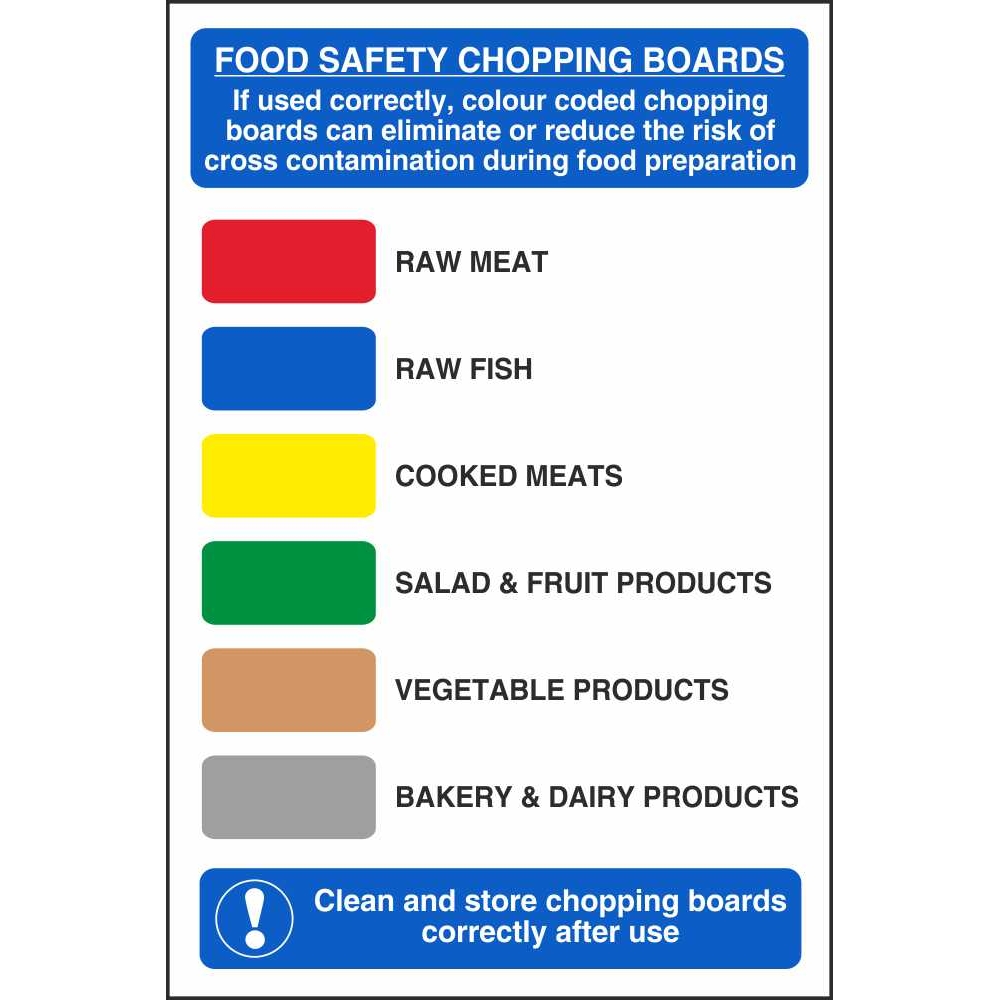
Credit: www.giacomospizza.com
How Cross-contamination Happens
Cross-contamination is often invisible. Bacteria, allergens, and even viruses can live on cutting boards and transfer to other foods. Here are some common ways it happens:
- Raw juices from meat or fish drip onto the board, then touch ready-to-eat food.
- Allergens (like nuts or shellfish) remain on the board and contaminate other items.
- Improper washing leaves bacteria behind, which multiply quickly.
- Using one board for everything increases the risk, especially during busy meal prep.
A single drop of raw chicken juice can contain thousands of bacteria. According to the CDC, 1 in 6 Americans gets sick from foodborne diseases each year, and much of this is preventable with better kitchen habits.
How To Use Color-coded Cutting Boards Correctly
Just having different colored boards is not enough; you need to use them the right way:
- Assign each board a food type and do not switch.
- Clean and sanitize boards between uses, even if used for the same food group.
- Store boards separately to prevent accidental mixing.
- Educate everyone in your kitchen (family or staff) about the system.
For best practice, keep a clear chart or reminder in your kitchen, especially if you have new cooks or children helping out.
Choosing The Right Material For Cutting Boards
Color coding works best with certain materials. The two most popular choices are plastic and wood.
| Material | Pros | Cons |
|---|---|---|
| Plastic | Easy to color-code, dishwasher safe, affordable | Prone to deep cuts where bacteria can hide |
| Wood | Gentle on knives, naturally antimicrobial | Harder to color-code, not always dishwasher safe |
| Bamboo | Eco-friendly, lightweight | Can splinter, not as common for color coding |
| Composite | Durable, often dishwasher safe | Less common in color sets |
Most color-coded boards are made from polypropylene or high-density polyethylene. These plastics are tough and can handle regular cleaning. However, if you see deep grooves or stains, it’s time to replace them—bacteria thrive in scratches.
Common Mistakes With Cutting Board Colors
Switching to a color system is only effective if you avoid these common errors:
- Forgetting to clean between uses: Even a color-coded board can spread bacteria if you don’t wash it.
- Using the wrong color in a rush: In busy moments, people grab the nearest board. Keep boards within easy reach and labeled.
- Not replacing worn boards: Old boards with knife scars can’t be fully cleaned. Replace boards every 1-2 years, or sooner if you see damage.
- Overlooking allergens: Color coding also helps prevent allergen cross-contact, not just bacteria. If someone in your home is allergic to nuts, for example, use a separate board and knife color.

Credit: www.creativesafetysupply.com
Setting Up A Color-coded System At Home
You don’t need to run a restaurant to benefit from color-coded boards. Here’s how to set up a simple system:
- Buy a set of six color-coded boards. Many kitchen stores sell these as a pack.
- Label each board with stickers or permanent marker if you worry about forgetting.
- Store boards upright in a rack, in the same order every time.
- Teach family members or roommates what each color means.
- Clean with hot, soapy water after every use. For extra safety, sanitize with diluted bleach.
It can help to print a small chart and put it on the fridge. Involve children in learning the system—this is a practical food safety lesson.
Cutting Board Colors In Restaurants Vs. Home Kitchens
Professional kitchens have strict rules and often use more colors, including purple (for allergen-free prep) or black (for bars). At home, you might not need every color, but even just two or three can make a difference.
For example, a home cook might use:
- Red for all raw animal proteins
- Green for produce
- White for bread and dairy
This simple system still lowers risk. In restaurants, health inspectors look for color-coded boards and check that staff use them correctly. Some large kitchens even use digital reminders or color-coded knives to match the boards.
Cleaning And Maintenance Tips
A clean cutting board is as important as the color system itself. Here’s how to keep your boards safe:
- Wash immediately after use with hot, soapy water.
- Dishwasher-safe boards are best for high heat cleaning.
- Sanitize weekly by soaking in a solution of 1 tablespoon bleach per gallon of water for 1 minute, then rinse and air dry.
- Dry boards upright to prevent moisture and bacteria growth.
- Inspect regularly for grooves, stains, or odors. Replace if needed.
Never use one side for raw meat and the other for vegetables without washing in between. Bacteria can move through the board or onto your hands.
Advanced Tips For Food Safety
Most people know the basics, but two advanced tips can boost your safety:
- Color-coded knives: Use matching colored handles for knives and boards. This double system makes mistakes even less likely. For example, a blue-handled knife only touches the blue board for fish.
- Separate storage: Keep boards in separate slots or racks, not stacked. This prevents juices from dripping between boards.
Few home cooks do both, but these steps are common in large kitchens.
Data: How Color-coding Reduces Illness
Studies show that kitchens using strict color-coded systems have fewer cases of foodborne illness. In the UK, a 2018 survey found that restaurants with color-coded boards had a 25% lower rate of cross-contamination incidents compared to those without. In the US, the FDA Food Code recommends this practice in all commercial food prep areas.
Another insight: Food poisoning outbreaks traced to home kitchens often involve confusion over raw and cooked food separation. A small investment in colored boards can prevent serious health problems.
When To Replace Your Cutting Boards
No board lasts forever. As a rule:
- Plastic boards: Replace every 1-2 years or when you see grooves.
- Wood boards: Replace if you see cracks or warping.
- Discoloration or odor: Replace immediately.
Keep in mind, even “antimicrobial” boards are not magic—regular cleaning is still required.

Credit: minnesota.safefoodtraining.com
Color Coding For Allergens
With food allergies on the rise, color coding is also used for allergen management. Some kitchens use a purple board for allergen-free foods (like gluten-free or nut-free items). If you or a family member has allergies, consider adding a purple board to your set.
Cost And Where To Buy
Color-coded cutting boards are affordable. A basic set of six plastic boards ranges from $20 to $40. Look for boards with clear labels and non-slip surfaces. High-quality sets are available online, in kitchen stores, or at restaurant supply shops. You can find recommended brands and more buying tips at FoodSafety.gov.
Comparison: Color-coded Boards Vs. Single Board Use
Many home cooks still use a single board for everything. Here’s a quick comparison:
| System | Pros | Cons |
|---|---|---|
| Color-Coded Boards | Reduces cross-contamination, easy to train, improves safety | Requires storage space, small cost to buy |
| Single Board Use | Simple, less equipment | High risk of cross-contamination, harder to keep safe |
For families with children, elderly, or anyone with a weak immune system, using colored boards is a smart investment in health.
Frequently Asked Questions
What Does Each Cutting Board Color Mean?
Each color is linked to a specific food type:
- Red: Raw meat like beef or pork
- Blue: Raw fish and seafood
- Yellow: Poultry such as chicken or turkey
- Green: Fruits and vegetables
- Brown: Cooked meat
- White: Bread and dairy
This system helps you keep foods separate and safe.
Can I Use Wood Cutting Boards For Color Coding?
Wood boards are less common in color-coded systems because they are hard to dye and mark. Most color-coded boards are plastic. However, you can use wood boards if you label them clearly and use one for each food type.
How Often Should I Replace My Cutting Boards?
Replace plastic boards every 1-2 years or sooner if you see deep knife marks, stains, or odors. Wood boards should be replaced if they crack, warp, or develop deep grooves. Regular checks keep your kitchen safe.
Is Color Coding Required By Law In Restaurants?
Color coding is not a legal requirement in all countries, but many health departments recommend it. In the US, the FDA and local health codes encourage color systems as a best practice for food safety.
Do I Need A Separate Knife For Each Cutting Board Color?
It is not required, but using matching colored knives adds an extra layer of safety. This is especially helpful in large kitchens or for families dealing with allergies.
Color-coded cutting boards are a simple, effective way to make your kitchen safer. With clear colors, good cleaning habits, and regular checks, you can reduce your risk of foodborne illness and protect everyone at your table.