Skip to content
The short answer: no, you don't strictly need one. But the honest answer is that a dedicated coffee grinder is the single biggest upgrade you can make to your morning cup. Whole beans hold in their aromatic oils and volatile compounds for weeks, yet once ground, coffee begins losing those flavors within minutes. So while you can absolutely pulverize beans with a hammer or a blender in a pinch, you'll get a dramatically better, more consistent brew with the right tool for the job.
The choice comes down to how much you value freshness, control, and convenience. In this guide, I'll break down exactly what grinding does to flavor, compare grinder types, share practical alternatives, and help you decide if investing in one is worth it for your routine. Plus, I'll cover an often-overlooked third path that might be the smartest option of all: having your local roaster do the grinding for you. You can also read our guide on what are the benefits of a french press coffee maker.
Why Grinding Fresh Beans Actually Matters
The flavors locked inside coffee beans are made up of delicate oils and aromatic compounds. These are sealed in the bean's cellular structure, protected from oxygen. The moment you grind the bean, you break that seal and expose an exponentially larger surface area to air. Oxidation begins immediately, and those volatile aroma compounds start to evaporate. This is why pre-ground coffee from a supermarket bag often tastes flat, dusty, or even slightly rancid compared to freshly ground beans.
The Science of Freshness and Flavor
In practice, the difference is striking. Water can only extract flavor from the coffee surface it touches. Finer grounds create a larger total surface area, so extraction happens faster. Whole beans, with their compact structure, release coffee oils slowly. That's why beans stay flavorful for weeks while ground coffee goes stale in a matter of days, not weeks. A bag of pre-ground coffee can lose a significant portion of its pleasant aroma within just a few days of being opened. For more on this, see our guide on can you grind spices in a coffee grinder.
The oils themselves are what carry most of coffee's signature flavors. When those oils oxidize, the resulting taste is bitter and papery. Grinding immediately before you brew, a practice called "grind-to-order" in specialty coffee circles, protects those oils and preserves the bright, complex notes for your cup.
Why Grind Size Matters More Than You Think
Grind size controls extraction rate. The water needs to pull the right amount of soluble compounds from the coffee to create a balanced cup. This is a fundamental relationship you cannot avoid:
- Too fine → over-extraction. Water struggles to pass through, pulling out bitter and harsh compounds. The cup tastes like burnt toast.
- Too coarse → under-extraction. Water rushes through, leaving behind the sweet and flavorful compounds. The cup tastes sour, weak, or watery.
- Just right → even extraction. The water pulls out a balanced range of acids, sugars, and oils, giving sweetness, body, and complexity.
A uniform grind size is the true goal. If your coffee particles range wildly from powder to boulder-sized chunks, the fine particles will over-extract and the boulders will under-extract in the same brew. The result is a cup that's simultaneously bitter and sour. This inconsistency is the real killer, and it's why grinder quality matters as much as grinder presence. For more on this, see our guide on can you grind nuts in a coffee grinder.
Types of Coffee Grinders Explained
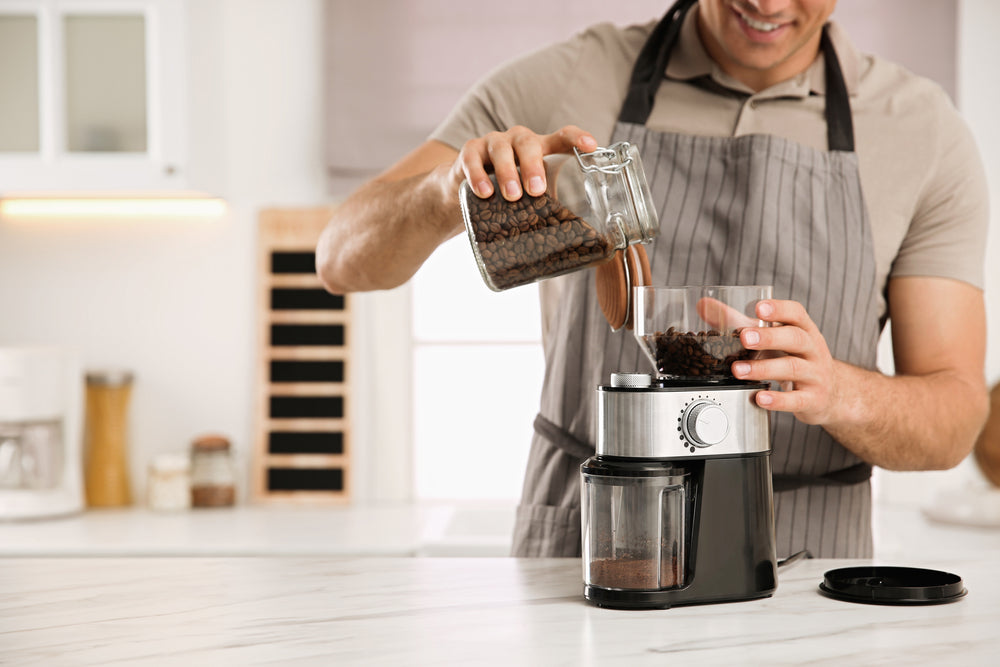
An electric burr grinder delivers the consistent particle size that makes a demonstrable difference in flavor.
The market offers two primary technologies for grinding coffee: blade and burr. They function completely differently, and those differences directly impact your final cup.
| Feature | Blade Grinder | Burr Grinder |
|---|---|---|
| Mechanism | Spinning propeller blade chops beans | Two abrasive surfaces crush beans |
| Consistency | Very uneven particle sizes | Highly uniform particle sizes |
| Price Range | Typically $15–$40 | Typically $50–$300+ |
| Durability | Decent for light use | Built for heavy daily use |
| Grind Settings | None – you control by time | Often 10–40 precise settings |
| Best For | Beginners or occasional use | Regular drinkers and enthusiasts |
Blade Grinders: The Budget Option
Blade grinders chop coffee beans with a rapidly spinning metal blade, similar to a mini food processor. They're affordable, compact, and wildly popular. But the physics works against you here. The blade shatters beans randomly, producing everything from fine dust to coarse chunks. To get an even grind, you have to shake the grinder while running it and pulse in short bursts, an unreliable technique that still yields inconsistent results. For more on this, see our guide on how often should you clean a coffee grinder.
Blade grinders also generate heat through friction. This heat can cook off the delicate volatile oils in the coffee, slightly degrading flavor. They're fine in a pinch and far better than nothing, but serious coffee drinkers notice the difference.
Burr Grinders: The Professional Choice
Burr grinders crush beans between two abrasive surfaces, called burrs, placed at a set gap. This gap determines the grind size. Because each bean passes through the same gap, the resulting particles are remarkably uniform. They also run slower and cooler, protecting volatile aroma compounds. For more on this, see our guide on why grind coffee beans fresh.
Burr grinders come in two types:
- Flat burrs – deliver extremely consistent grinds and are common in commercial settings
- Conical burrs – slightly less expensive, quieter, and ideal for home use
In my experience, the jump from blade to burr is the most dramatic single upgrade you can make to your coffee setup. It improves body, clarity, and sweetness across every brewing method.
Manual vs. Electric Grinders
Manual (hand-crank) grinders are quiet, portable, and require no electricity. A quality manual grinder will often outperform a comparably priced electric one because the cost goes into better burrs rather than a motor. They're excellent for travel, camping, or brewing for one or two cups at a time. The trade-off is effort — grinding 30 grams of beans by hand takes about 30 to 60 seconds.
Electric grinders are faster and effortless. One-button operation makes them ideal for brewing multiple cups daily. They take up more counter space and cost more for equivalent burr quality.
| Consideration | Manual Grinder | Electric Grinder |
|---|---|---|
| Effort | Requires 30–60 seconds of cranking | Instant, push-button |
| Noise | Quiet | Noticeable |
| Portability | Excellent | Poor |
| Price for quality burrs | Very affordable | More expensive |
| Counter space needed | Minimal | Significant |
How to Grind Coffee Beans Without a Grinder
Life happens — your grinder breaks, you're on vacation, or you've been gifted whole beans and no equipment. You have options. These alternatives work, especially for coarse grinds, but they demand effort and produce less consistent results.
Mortar and Pestle: For Small Batches
A mortar and pestle gives you surprising control. Add only a small handful of beans — no more than one or two tablespoons — and press down with a firm twisting motion. Work in circles, scraping the sides periodically with the pestle to collect stray beans. Expect this to take three to five minutes for a single cup's worth. This method works well for coarse and medium-coarse grinds, but honestly struggles to produce anything near the fineness needed for espresso.
Blender or Food Processor: The Quick Fix
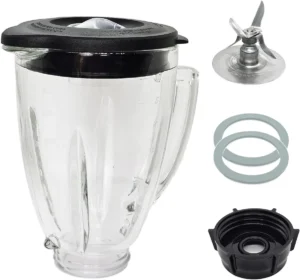
Blenders and food processors use the same blade-chop principle as a blade grinder, so expect the same inconsistency. The key technique is pulsing in two-second bursts. Pulse, stop, shake the container, and repeat. The shaking redistributes larger pieces so they hit the blade evenly. Watch carefully to avoid heating the beans; if the container feels noticeably warm, stop and let it rest.
This approach works reliably for a French press and cold brew, both of which tolerate slightly uneven particle sizes. It's less suitable for drip coffee makers that expect a consistent medium grind.
Rolling Pin, Hammer, or Cannister: For Coarse Grinds
Place a handful of beans in a sealed Ziploc bag, push out the air, and lay it on a cutting board. Run a rolling pin over the bag with firm, even pressure, or gently tap with the flat side of a meat mallet. Aim for a uniform coarse consistency more like breadcrumbs. This will effectively break down beans for steeping methods like cold brew, where the long brew time masks inconsistency. It's also the easiest to clean — you just throw away the bag.
Cheat Sheet: Match Your Method to the Alternative
| Brewing Method | Grind Size Needed | Best Alternative without a Grinder |
|---|---|---|
| French Press | Coarse | Rolling pin or blender |
| Cold Brew | Very coarse | Rolling pin or mortar |
| Drip Machine | Medium | Blender with rapid pulses |
| Pour-Over (like Moka Pot) | Medium-fine | Mortar and pestle with patience |
| Espresso | Fine and uniform | Not really practical without a grinder |
The Best Kept Secret: Buy Grind-to-Order Coffee
Here's the advice most articles skip. If you appreciate fresh coffee but aren't ready to invest in a grinder, buy whole beans and have the shop grind them for you. Specialty roasters grind beans to your exact brew method on professional burr grinders, giving you that premium, uniform grinding you can't achieve at home with cheap equipment. When you follow the basic freshness practices below, this can taste nearly as good as home grinding.
To keep grind-to-order coffee as fresh as possible:
- Buy smaller quantities. Skip the big bag. One to two weeks' worth (250 grams or half a pound) is ideal.
- Use it within two weeks. Grind-to-order coffee is at its finest for about the first seven to ten days.
- Store it in an airtight, opaque container. Clear containers let in light, which accelerates staling. Keep it away from heat and humidity.
- Buy from a local business. Having a relationship with a local roaster often means fresher batches with a far broader roast selection than the supermarket shelf.
If you love the ritual of a perfect cup but the convenience of a quick one, this path gives you the biggest flavor improvement for zero equipment cost. Check online for top-rated brewers if you're looking for a machine to pair with your freshly ground beans.
Choosing Your Grinder: A Buyer's Guide
Ready to invest? Here's how to match a grinder to your actual needs, drawn from the practical realities of daily use.
Budget: What You're Paying For
- Under $30 → Typically blade grinders. These work for occasional use but sacrifice consistency.
- $50–$100 → Entry-level burr grinders. Enjoy uniform grinds at a true budget price.
- $100–$200 → Good mid-range burr grinders with more settings and better build quality.
- $200+ → High-end grinders with exceptional consistency, ideal for espresso and serious pour-over enthusiasts.
I would not recommend spending more than $200 for home use unless you're diving into espresso, where consistency is non-negotiable.
Usage Frequency: Match the Machine to the Workload
How often will you grind? Home espresso machines pull shots daily, so a burr grinder with a strong motor is a must. If you brew drip coffee every morning, a mid-range burr grinder will last for many years. If you're a weekend-only coffee drinker, a blade grinder is acceptable, but a quality manual grinder with burrs will still outperform it for the same price.
Your Brewing Method: The Deciding Factor
This is the single most important consideration. If you use a French press, you need a burr grinder with a coarse, consistent setting for a clean cup. My guide to the moka pot can walk you through the finer, more precise grind this stovetop brewer demands. For espresso, you need fine, powdery, extraordinarily consistent grounds, which really does require a decent burr grinder. If you rely on cold brew, big, chunky grounds are fine and you can use almost any grinder. Match a grinder with enough settings to dial in your primary brew method.
Maintenance and Longevity
A burr grinder is an investment that lasts, provided you care for it. Every few weeks, brush out the burr chamber with a stiff brush to remove retained grounds and coffee oils. Follow the manufacturer's guidance on deep cleaning. Food-grade grinder cleaner is effective but can be overkill unless you're using coffee with flavoring oils. With basic maintenance, a quality burr grinder should easily last 10 years per its general definitions of measurement standards for kitchen appliances quality metrics.

Freshly ground coffee ready for the brewer, preserving the aromatic oils and flavors that stale grounds lack.
When You Might Skip a Grinder Entirely
Not every coffee drinker needs the fresh-grind ritual. Here are the situations where grinding your own beans adds very little value.
You Drink Pre-Ground Coffee Without Complaint
Honestly, convenience wins for many people. Pre-ground coffee is fast, consistent, and familiar. If the coffee you truly enjoy is in a supermarket bag and you're happy with that taste, buying a grinder will change your coffee but might not be a worthwhile investment. Use it fresh, store it well, and you'll enjoy a solid, dependable cup.
You Use Coffee Pods and Capsules
Pods and capsules are the ultimate in convenience. Each one is hermetically sealed, protecting freshness for months, and delivering a fixed dose with zero cleanup. If your priorities are speed, consistency, and minimal effort, pod systems make perfect sense. They sacrifice the subtle flavor nuances that fresh beans offer, but they win on practicality.
You Drink Coffee Rarely
If you only brew coffee on weekends or for guests, a grinder still works to your benefit because it keeps beans fresh longer than pre-ground. That said, a cheaper manual grinder is perfect for this scenario. You save money, counter space, and you get a much better tasting cup for your occasional brews.
Frequently Asked Questions
Do you really need a coffee grinder?
No, you can absolutely buy pre-ground coffee or have beans ground at the store. But a grinder gives you vastly fresher flavor and lets you control grind size precisely. It's the best flavor upgrade you can make to your home coffee setup.
Can I grind coffee beans without a grinder?
Yes, a mortar and pestle, blender, food processor, or rolling pin will break down beans in a pinch. These methods work best for coarse grinds used in French press or cold brew coffee. Your grind will be less consistent, which does affect the flavor balance.
What grind size is best for different coffee makers?
- Extra fine → Espresso
- Fine → Moka pot
- Medium-fine → Pour-over
- Medium → Drip coffee makers
- Coarse → French press and cold brew
Does grinding coffee affect flavor?
Yes, more than any other factor except the bean itself. Grinding determines extraction rate. If the grind is off, your coffee will taste bitter and over-extracted or sour and under-extracted. Consistent particle size ensures balanced, flavorful extraction.
Should You Buy a Grinder?
If you love coffee and care about how it tastes, a grinder is worth the modest investment. A burr grinder with a few essential settings that fits your budget and brew style is all you need. The jump in freshness and control will transform your morning routine.
If you value speed and simplicity above all, skip the grinder. Buy high-quality pre-ground or grind-to-order from a local roaster. The coffee will still be good, especially if you store it right.
The best grinder is the one you'll actually use. Start with a model that suits your routine today, even a simple blade grinder if that's your budget, and upgrade eventually. Every cup will taste better for it.
Want to explore more kitchen upgrades that make daily life easier? Read our guide to picking the best beverage dispenser for parties, or take a fresh look through all our kitchen tips to level up your home setup.