Skip to content
Keeping floors clean is a basic part of home and business care. Many people mop their floors every week, but few think about the water in their bucket. Using dirty water spreads germs instead of removing them. So, how often should you change mop water?
The answer is not simple. It depends on the area, how dirty the floor is, and your cleaning habits. Knowing the right timing can make your cleaning more effective, protect your health, and save your time. Let’s dive deep into how often you should change mop water and why it matters.
Why Changing Mop Water Matters
Mop water may look clean at first, but it quickly turns dirty as you clean. Every time the mop touches the floor, it picks up dust, bacteria, and grime. These go straight into your bucket. If you keep using the same water, you are just moving dirt around.
Researchers at the University of Arizona found that floors can have over 100,000 bacteria per square inch. Dirty mop water only adds to the problem. Changing the water often is key to stopping germs from spreading and keeping floors safe for children and pets.
Factors That Affect How Often You Should Change Mop Water
There is no single rule for everyone. You need to think about several things:
- Type of Floor: Tile, wood, and vinyl floors have different needs. Porous floors like wood hold more dirt and need cleaner water.
- Room Usage: Kitchens, bathrooms, and entryways get dirty faster than bedrooms or offices.
- Visible Dirt: If you can see the water is dirty, change it right away.
- Cleaning Solution: Some cleaning products break down dirt faster, making water dirty quicker.
- Health Concerns: If someone in your home is sick or has allergies, use fresh water more often.
:max_bytes(150000):strip_icc()/GettyImages-451830763-97abc994dc7f41a2a3b0f20571bd34fc.jpg)
Credit: www.southernliving.com
Signs Your Mop Water Needs Changing
It’s easy to miss the signs, but here are some clear ones:
- Cloudy or brown water
- Unpleasant odor
- Floating debris
- Sticky residue left on the floor after mopping
If you notice any of these, stop and refill your bucket. Some people think clear water means it’s clean, but bacteria can be invisible. Trust your senses, but don’t wait until water looks bad.
General Guidelines For Changing Mop Water
Most cleaning experts recommend changing mop water:
- After every room: This is the safest rule. Finish one room, then refill the bucket.
- Every 10–15 minutes: If you are cleaning a big area, don’t wait longer than this.
- When water looks dirty: Always change water as soon as it gets cloudy or smelly.
Here is a simple chart to help you decide:
| Area | Change Water | Reason |
|---|---|---|
| Kitchen | After each room | Grease, food particles |
| Bathroom | After each room | Bacteria, high moisture |
| Living Room | Every 15 minutes | Dust, pet hair |
| Office | Every 20 minutes | Low dirt level |
How Dirty Water Affects Cleaning
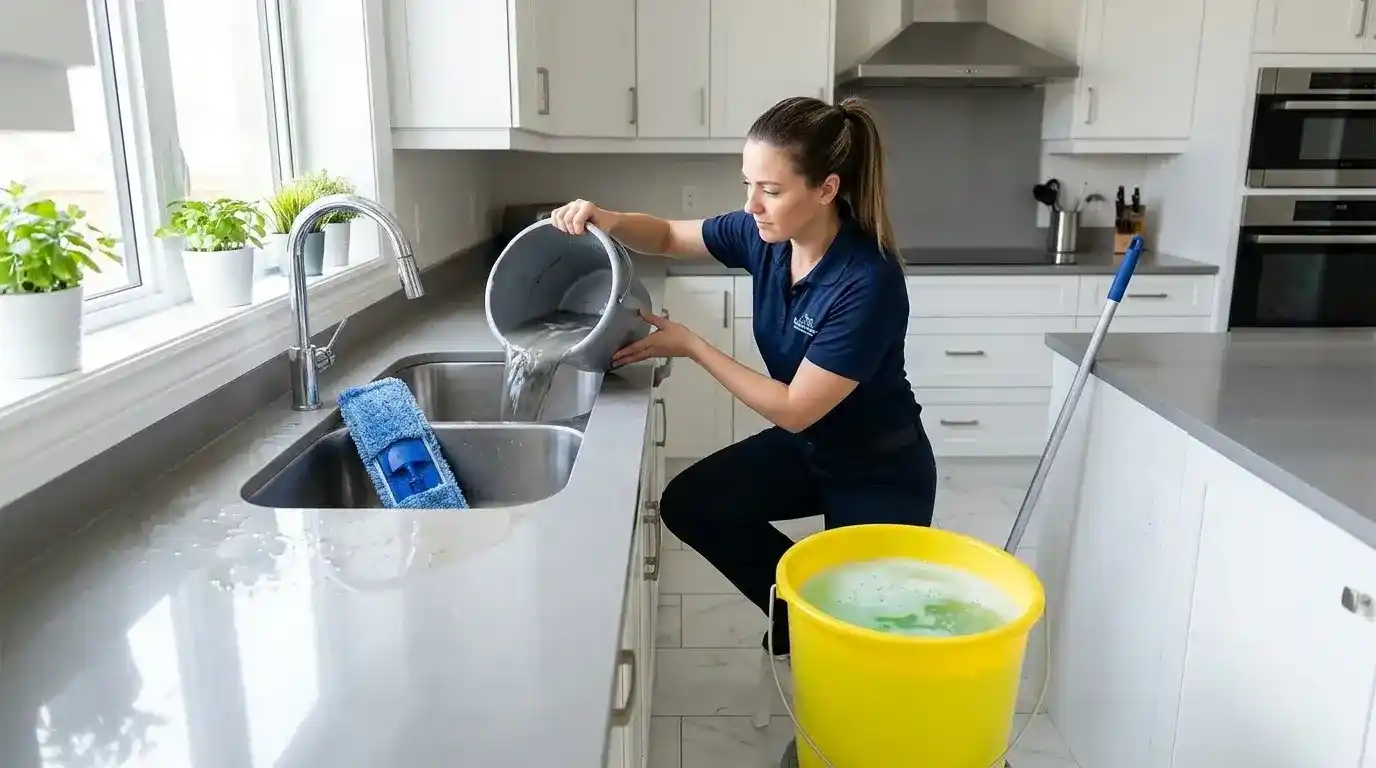
Using dirty mop water can create more problems than you think:
- Spreads germs: Instead of killing germs, you move them from one spot to another.
- Leaves streaks: Floors may look dull or have lines.
- Sticky floors: Soap and dirt mix, leaving residue.
- Bad smell: Old water can smell, especially in warm rooms.
People often miss these problems because they focus only on visible dirt. Clean water is necessary for true cleanliness.
Best Practices For Changing Mop Water
To make your cleaning routine better, follow these steps:
- Start with clean water and mop: Wash your mop before you start.
- Use two buckets: One for clean water, one for rinsing the mop. This reduces dirt transfer.
- Change water often: Don’t wait until water is filthy.
- Clean mop after each use: Rinse and dry it to prevent bacteria growth.
- Use gloves: Protect your hands from germs and chemicals.
Here’s a comparison of single-bucket vs. double-bucket systems:
| System | Water Change Frequency | Cleaning Effectiveness |
|---|---|---|
| Single-bucket | Every room or 10–15 minutes | Moderate |
| Double-bucket | Every 20–30 minutes | High |
Double-bucket systems keep the clean water separate and cut down on how often you need to change it. This method is used in hospitals and hotels.
Mistakes People Make With Mop Water
Even experienced cleaners make mistakes. Here are some common ones:
- Not changing water often enough: Many wait until water is brown, which is too late.
- Using too much detergent: Soap builds up and makes water dirty faster.
- Ignoring mop cleanliness: Old mops hold bacteria even after washing.
- Mopping high-traffic areas last: Start with the dirtiest room so you don’t spread germs to clean areas.
- Not drying floors properly: Wet floors can attract more dirt and bacteria.
A less-known tip: Always clean the mop head with hot water after finishing. Cold water does not kill germs as well.
How Often Should You Change Mop Water In Different Settings
Home Cleaning
In most homes, mop water should be changed:
- After every room
- More often in kitchens and bathrooms
- Less often in bedrooms or hallways
If you have pets or young children, change water more frequently. Pet hair and spills make water dirty quickly.
Offices
For offices with light foot traffic, change water every 20–30 minutes. If cleaning conference rooms or kitchens, follow home rules.
Hospitals
In hospitals, strict rules apply. Water must be changed after each patient room. Infection control is critical. Double-bucket systems are common.
Restaurants
Restaurants have high dirt levels. Mop water should be changed after every section (kitchen, dining area, restroom). Floors pick up grease, food, and bacteria.
How To Make Mop Water Last Longer
You can make mop water last longer by following these tips:
- Sweep before mopping: Remove loose dirt first.
- Use high-quality cleaning solutions: They break down dirt better.
- Rinse mop often: Don’t let dirt build up.
- Avoid overloading the bucket: Too much water means more dilution, but less cleaning power.
Here is a quick data table:
| Tip | Effect on Water | Recommended For |
|---|---|---|
| Sweeping first | Reduces dirt in water | All settings |
| Using quality cleaners | Slows water dirtying | Kitchens, bathrooms |
| Double-bucket system | Keeps water cleaner | Large areas |
Real-world Examples
Let’s look at two real-life situations:
- Busy Restaurant: The manager noticed sticky floors even after mopping. He started changing mop water every 10 minutes and used a double-bucket system. The stickiness disappeared, and customers noticed cleaner floors.
- Family Home with Pets: A mother mopped once a week but rarely changed water. After learning about bacteria, she began changing water after each room. The home smelled fresher, and her child had fewer allergy symptoms.
These examples show that small changes in routine make a big difference.
Expert Recommendations
The Centers for Disease Control and Prevention (CDC) recommends changing mop water often, especially in healthcare settings. Their advice: “Change cleaning solution when visibly dirty or after cleaning bathrooms, kitchens, or patient rooms.”
Professional cleaning services often use two-bucket systems and change water every 15–30 minutes. This keeps floors truly clean and reduces disease risk.
For more detailed guidelines, you can visit the CDC Environmental Cleaning Guidelines.
Frequently Asked Questions
How Can I Tell If My Mop Water Is Dirty?
Look for cloudy water, floating debris, or a bad smell. If you see or smell anything unusual, change the water.
What Happens If I Don’t Change Mop Water Often?
You risk spreading germs, leaving sticky floors, and making your space smell bad. Dirty water is not effective for cleaning.
Is It Okay To Add More Detergent Instead Of Changing The Water?
No, adding detergent does not fix dirty water. It can make the water sticky and less effective. Always use fresh water.
Should I Use Hot Or Cold Water When Mopping?
Hot water cleans better and kills more germs. Use hot water for greasy or dirty floors, but check if your floor type can handle heat.
Can I Reuse Mop Water For Different Rooms?
It is not safe. Each room has its own dirt and germs. Changing water after every room prevents cross-contamination.
Closing Thoughts
Changing mop water may seem like a small task, but it is vital for clean floors and a healthy home. The right timing depends on your space, how dirty it gets, and your cleaning habits. Remember, dirty water spreads germs and leaves floors looking worse.
Use these tips to keep your mop water clean, change it often, and enjoy fresher, safer floors every time you clean. Small changes can make big differences in your cleaning results and health.