Skip to content
Frying chicken at home can feel intimidating, especially if you want crispy, juicy results. But with an electric skillet, it’s easier than you might think. Electric skillets give you steady heat and more control than stovetops, so you can get golden, crunchy chicken every time. If you’re new to frying or just want to improve your skills, this guide will walk you through everything—from preparing your chicken to serving up the perfect meal. You’ll also learn tips that most beginners overlook, so your fried chicken turns out delicious and safe to eat.
Why Use An Electric Skillet For Frying Chicken?
Many home cooks use traditional pans, but an electric skillet offers several advantages. The most important is temperature control. Fried chicken needs to cook at a steady temperature, usually around 350°F (175°C), to become crispy outside and fully cooked inside. Most stovetops fluctuate, causing uneven results. Electric skillets maintain the heat you set, so your chicken cooks evenly and doesn’t burn.
Another benefit is the large, flat surface area. You can fry more pieces at once without crowding, which helps each piece cook properly. Plus, the deep sides of many skillets reduce oil splatter and make cleanup easier.
Preparing Your Chicken For Frying
Great fried chicken starts with good preparation. Here’s what you’ll need:
Ingredients And Quantities
- Chicken pieces (bone-in or boneless): About 2–3 lbs (8–12 pieces)
- Buttermilk: 2 cups (for marinating)
- Salt: 2 teaspoons
- Black pepper: 1 teaspoon
- Paprika: 1 teaspoon
- Garlic powder: 1 teaspoon
- Flour: 2 cups (for coating)
- Eggs: 2 (optional, for extra crunch)
- Vegetable oil: Enough to fill the skillet about 1 inch deep
Marinating For Flavor And Tenderness
Marinating is a key step most beginners skip. Soak your chicken in buttermilk for at least 2 hours, or overnight for best results. The acid in buttermilk softens the meat and adds flavor. Add salt, pepper, paprika, and garlic powder to the marinade for extra taste.
Preparing The Coating
Set up a breading station:
- Pour the flour into a shallow bowl.
- Beat eggs in another bowl (optional—adds crunch).
- Take marinated chicken pieces, dip them in the egg, then coat in flour.
- Press the flour onto the chicken so it sticks well.
Tip: Let coated pieces rest for 10 minutes before frying. This helps the coating stay on during cooking.

Credit: inthekitch.net
Setting Up Your Electric Skillet
Before you start frying, make sure your skillet is ready:
- Plug in the skillet and set the temperature to 350°F (175°C).
- Pour in the oil until it’s about 1 inch deep.
- Wait until the oil reaches the right temperature. You can check with a thermometer, or drop a small piece of bread in the oil. If it sizzles and browns in about 60 seconds, it’s ready.
Safety First
Hot oil can be dangerous. Keep children away, and always use tongs to handle chicken. If oil splatters, don’t panic—just turn down the heat slightly.
How To Fry Chicken In An Electric Skillet
Now for the main event—frying your chicken. Follow these steps for the best results:
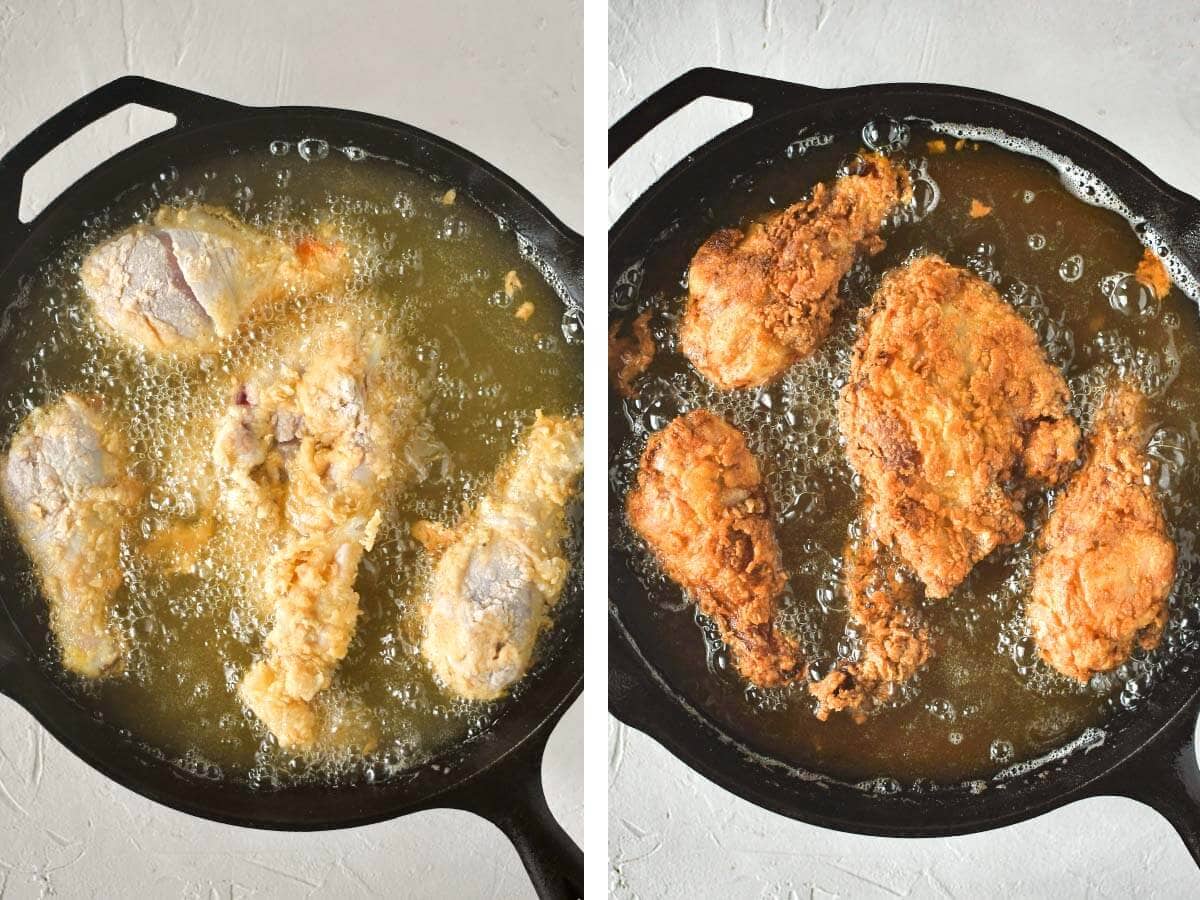
- Add chicken pieces carefully to the hot oil. Don’t crowd the skillet; leave space between each piece.
- Fry on each side for 8–10 minutes. Bone-in pieces may take longer (up to 15 minutes per side).
- Turn pieces with tongs when the coating turns golden brown.
- Check internal temperature. Chicken should reach 165°F (74°C) inside. If you don’t have a thermometer, pierce the thickest part; juices should run clear.
- Remove and drain. Place fried chicken on a wire rack or paper towels to drain excess oil.
Cooking Time Comparison Table
Here’s how different chicken pieces compare for frying time:
| Chicken Part | Bone-in | Boneless |
|---|---|---|
| Breast | 12-15 min/side | 8-10 min/side |
| Thigh | 13-16 min/side | 9-11 min/side |
| Drumstick | 12-15 min/side | 8-10 min/side |
| Wing | 10-12 min/side | 7-9 min/side |
Note: Always check temperature, not just time.
Credit: www.retrorecipebox.com
Tips For Crispy, Flavorful Fried Chicken
A few practical tricks make a big difference:
- Don’t overcrowd the skillet. This lowers oil temperature and makes chicken soggy.
- Let the coating rest before frying. This helps it stick and gives better crunch.
- Use fresh oil. Old oil makes chicken greasy and dull.
- Drain fried chicken on a wire rack—not paper towels. This keeps it crisp.
Common Mistakes And How To Avoid Them
Most beginners make these mistakes:
- Skipping the marinade: Makes chicken dry and bland.
- Using cold oil: Causes greasy, undercooked chicken.
- Crowding the skillet: Leads to uneven cooking.
- Not checking temperature: Risk of undercooked or burnt chicken.
Choosing The Right Oil For Frying
Oil choice affects taste and safety. Go for vegetable oil, canola oil, or peanut oil. These have high smoke points, so they won’t burn easily. Avoid olive oil or butter—they burn at lower temperatures.
Oil Comparison Table
Here’s a quick look at popular frying oils:
| Oil Type | Smoke Point (°F) | Flavor Impact |
|---|---|---|
| Vegetable Oil | 400-450 | Neutral |
| Canola Oil | 400 | Neutral |
| Peanut Oil | 450 | Mild, nutty |
| Olive Oil | 375 | Strong |
| Butter | 350 | Rich, but burns easily |
Credit: inthekitch.net
Cleaning Up After Frying
Cleaning up is part of the process. Let the oil cool completely before handling. Pour used oil into a container for disposal—never pour it down the sink. Wipe down your skillet with paper towels, then wash with warm, soapy water.
Some skillets have removable parts, making cleaning easier.
Tip: If you plan to reuse oil, strain it to remove crumbs and store in a sealed container.
Serving Suggestions And Storage
Fried chicken is best served hot, but you can keep it crispy for later.
- Serve with sides like mashed potatoes, coleslaw, or biscuits.
- Store leftovers in an airtight container in the fridge. To reheat, use the oven—not the microwave—to keep the coating crisp.
Serving Size Table
How much chicken should you make? Here’s a guide:
| Number of People | Chicken Pieces Needed | Approx. Chicken Weight |
|---|---|---|
| 2 | 4-6 | 1 lb |
| 4 | 8-12 | 2–3 lbs |
| 6 | 12-18 | 3–4 lbs |
Practical Insights Most Beginners Miss
- Temperature recovery: After adding chicken, oil temperature drops. Wait a minute before adding more pieces. This keeps frying consistent.
- Coating thickness: Thick flour coating can fall off or become gummy. Use just enough flour, and shake off excess.
- Resting after frying: Let chicken rest 5 minutes before serving. The juices settle, making it tastier.
Health And Safety Considerations
Frying adds calories, so enjoy fried chicken in moderation. Always cook chicken fully to avoid foodborne illness. For added safety, use a food thermometer and keep your workspace clean.
For more detailed food safety info, visit CDC Food Safety.
Frequently Asked Questions
How Do I Know If My Chicken Is Cooked Through?
Check the internal temperature with a food thermometer. It should reach 165°F (74°C). If you don’t have a thermometer, cut into the thickest part—no pink, and juices should run clear.
Can I Fry Frozen Chicken In An Electric Skillet?
No, don’t fry frozen chicken. It causes oil splatter and uneven cooking. Thaw chicken fully before frying.
What’s The Best Way To Keep Fried Chicken Crispy?
Drain on a wire rack, not paper towels. If you need to hold chicken, place it in a warm oven (about 200°F) to keep it crisp.
Is Electric Skillet Frying Healthier Than Deep Frying?
Electric skillet frying uses less oil, so it can be a bit healthier. But fried chicken is still high in calories and fat. For healthier options, try oven-baking or air frying.
How Do I Store Leftover Fried Chicken?
Cool the chicken, then place it in an airtight container. Refrigerate for up to 3 days. Reheat in the oven for best texture.
Frying chicken in an electric skillet is simple, safe, and produces restaurant-quality results. With the right preparation, oil choice, and cooking method, you’ll get crispy, juicy chicken every time. Remember to take your time, check temperatures, and don’t skip the marinade.
Practice makes perfect—soon you’ll be serving fried chicken that rivals your favorite restaurant.