Keeping large floors spotless can feel like a huge task, but with the right approach, you can mop even the biggest areas quickly and effectively. Whether you manage a school, hospital, shopping mall, warehouse, or simply have a big open-plan home, efficient mopping saves time, energy, and money. Many people jump in with a mop and bucket, but small mistakes lead to wasted effort and less-than-clean results. A smarter method makes all the difference.
This guide explains step-by-step how to mop large floor areas efficiently, using practical tips, clear examples, and expert advice. You’ll learn how to choose the best equipment, organize your workflow, avoid common mistakes, and keep floors clean with less effort.
Choosing The Right Equipment
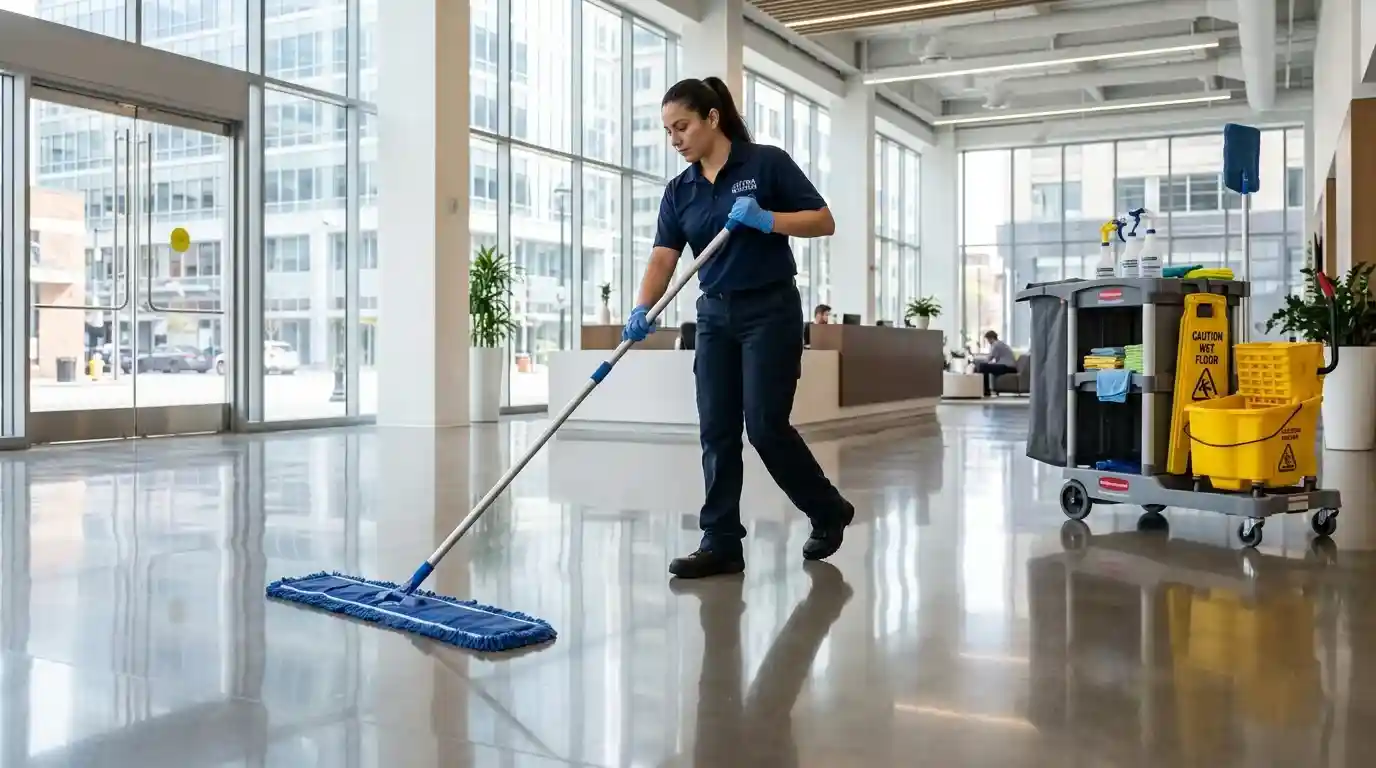
The tools you use directly affect how fast and well you can mop a large floor. Using the wrong mop or bucket can double your workload. Here’s what to look for:
Mop Types Compared
| Mop Type | Best For | Pros | Cons |
|---|---|---|---|
| String Mop | Rough, uneven surfaces | Absorbs well, inexpensive | Heavy when wet, less coverage per swipe |
| Flat Mop | Smooth, large areas | Lightweight, covers more ground, easy wring | Less effective on heavy dirt |
| Microfiber Mop | Dust and light cleaning | Highly absorbent, reusable pads, eco-friendly | Not for sticky messes |
| Sponge Mop | Small spills, corners | Good for spot cleaning | Not ideal for large areas |
| Commercial Rolling Mop | Very large, public areas | Covers wide paths, durable | Expensive, needs storage space |
For most large spaces, a flat mop or commercial rolling mop is best. Microfiber pads clean well and are easy to swap out when dirty. For dusty environments, a microfiber dust mop can quickly remove loose dirt before wet mopping.
Bucket System And Accessories
A dual-chamber bucket (one for clean water, one for dirty water) reduces streaks and re-depositing dirt. Always use a mop wringer to avoid soaking the floor and wasting effort. Consider mop handles with adjustable lengths to reduce bending and back pain.
Other helpful accessories:
- Wet floor signs for safety
- Extra mop pads to switch mid-clean
- Floor squeegee for drying large wet areas quickly
Never overlook the value of good tools. Investing in the right equipment pays off by saving hours of work each week.
Preparing The Floor
Before you start mopping, preparing the floor properly makes cleaning faster and more effective. Skipping this step is a common mistake.
- Remove loose dirt and debris: Sweep or vacuum the entire area. Even a small amount of grit can scratch surfaces and make mopping harder.
- Pick up objects: Remove chairs, rugs, bins, and cables from the floor. Work in sections if moving everything at once isn’t possible.
- Spot-clean sticky areas: If you see spills, gum, or sticky spots, treat them first with a damp cloth or scraper.
One insight many beginners miss: Dry cleaning is as important as wet mopping. If you mop over sand or dust, the dirt spreads and damages the floor.
Selecting The Best Cleaning Solution
What you put in your mop bucket matters. The wrong cleaner can leave residue, damage floors, or require extra rinsing.
Comparing Cleaning Solutions
| Solution Type | Best For | Notes |
|---|---|---|
| Neutral pH Cleaner | Most floors (tile, vinyl, wood, laminate) | Safe, won’t damage finish, no residue |
| Disinfectant Cleaner | Hospitals, kitchens, bathrooms | Kills germs, may need rinsing |
| Degreaser | Warehouses, restaurant floors | Cuts through oil, not for wood |
| Homemade Vinegar Solution | Tile, stone (not marble/granite) | Cheap, eco-friendly, can dull some finishes |
Always follow the manufacturer’s instructions for dilution. Using too much cleaner can make floors sticky and harder to mop next time.
Organizing Your Workflow
Efficiency is not just about speed; it’s about smart planning. Organize your approach before you start.
Divide And Conquer
Break the area into workable zones. For example, in a 10,000-square-foot warehouse, divide the floor into six 1,600–1,700-square-foot sections. Mark these sections mentally or with tape if needed.
Plan Your Route
Always mop from the farthest corner toward the exit. This way, you don’t walk on wet, clean floors. In high-traffic places, mop during low-use hours to avoid interruptions.
Work In Overlapping Passes
Overlap each mop pass by about one-third. This ensures you cover every spot and avoid streaks or missed patches.
Timing And Breaks
For very large areas, schedule short breaks every 30–40 minutes. Fatigue leads to sloppy work and safety risks. Hydrate and stretch to prevent aches.
Mopping Technique For Large Areas
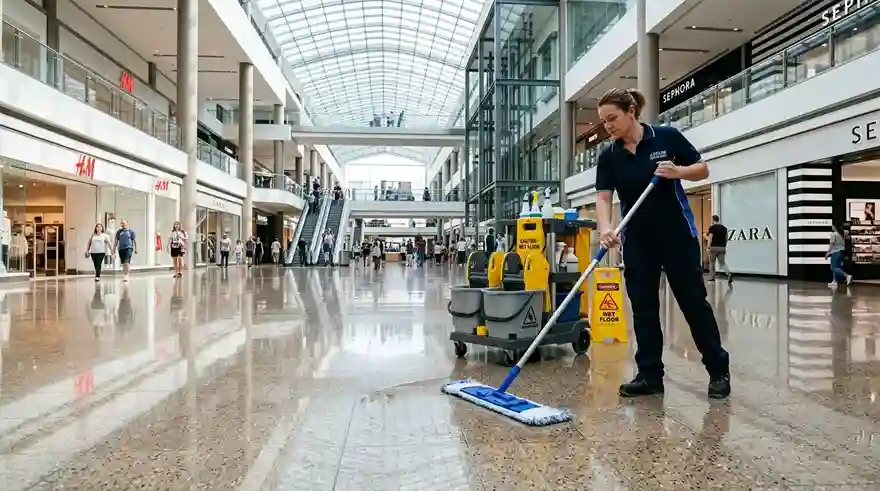
The way you mop matters as much as the tools. Here’s how to cover big spaces fast without missing dirt or leaving streaks.
Step-by-step Process
- Soak and wring: Dip the mop in the solution, then wring it out well. Overly wet mops leave puddles and take longer to dry.
- Mop in figure-eight or S-patterns: This covers more ground per swipe and reduces fatigue. Always keep the mop head flat on the floor.
- Flip or change pads regularly: For microfiber mops, switch to a clean pad when the first one gets dirty—usually every 250–500 square feet.
- Rinse mop often: If using a traditional mop, rinse in the clean water chamber, then wring out. Dirty water means you’re spreading grime.
- Edge cleaning: Run the mop along walls and corners first. Then fill in the central space.
- Dry as you go: In humid areas or with slow-drying floors, use a squeegee to speed up drying and reduce slip risks.
Pro tip: For very large jobs, consider using a floor scrubber machine if budget and storage allow. These machines cover up to 20,000 square feet per hour with minimal effort.
You might find this helpful: Best Mops for Hardwood Floors
Safety And Ergonomics
Mopping large floors can strain your body if you’re not careful. It also brings slip-and-fall risks for anyone in the area.
Protecting Yourself
- Use a mop handle at chest height to reduce back strain.
- Switch hands regularly to avoid muscle fatigue.
- Wear slip-resistant shoes, especially on wet floors.
Keeping Others Safe
- Place wet floor signs at entry points and high-traffic zones.
- If possible, block off freshly mopped areas until dry.
Environmental Factors
Good ventilation speeds drying and reduces fumes. Open windows or use fans if possible. For night cleaning, make sure the area is well lit.
Maintaining Equipment For Best Results
Clean, well-kept tools last longer and clean better. After mopping:
- Rinse mop heads thoroughly in hot water.
- Wash microfiber pads in a washing machine—never use fabric softener, as it reduces absorbency.
- Empty and scrub mop buckets after every use to prevent bacteria growth.
- Hang mops to dry, don’t leave them in buckets.
A small effort in cleaning your tools means faster, better results next time.
Common Mistakes To Avoid
Many people waste time and energy by repeating the same errors. Here are some to watch out for:
- Using dirty water: Always change water when it looks cloudy.
- Skipping dry cleaning: Never mop over dust or crumbs.
- Over-wetting floors: Too much water can damage wood or laminate and increases drying time.
- Not changing pads: Dirty mop heads just spread grime.
- Mopping without a plan: Random movements miss areas and double your work.
A surprising insight: Using too much cleaning solution actually attracts dirt faster. Less is often more.
When To Consider A Machine
For very large facilities (schools, airports, supermarkets), even the best manual mopping can be slow. In these cases, a floor scrubber or auto-scrubber machine can clean up to 50,000 square feet per hour. While the upfront cost is high, these machines pay off in large spaces by reducing labor and improving cleanliness. For more on commercial cleaning machines, see this Wikipedia guide.
Real-world Example
Imagine mopping a 15,000-square-foot gymnasium. Using a single string mop and a small bucket, it can take one person up to 4–5 hours. With a flat mop, dual-chamber bucket, and a clear workflow, the same job can be done in 2–2.
5 hours—saving you half a day’s work.
Quick Reference: Mop Size Vs. Area Coverage
A common question is: How much can I clean with one mop head? Here’s a handy comparison.
| Mop Size/Type | Approx. Area Before Changing | Best Use |
|---|---|---|
| Small String Mop (12 oz) | 200–400 sq ft | Small rooms, spot cleaning |
| Large Flat Mop (18–24”) | 500–1,000 sq ft | Classrooms, offices, gym floors |
| Rolling Commercial Mop | 1,500+ sq ft | Warehouses, malls, airports |
Choosing the right size mop means less stopping to rinse or swap pads.
Closing Thoughts
Mopping large floor areas efficiently is about more than just effort—it’s about smart choices. With the right tools, a clear plan, and proper technique, you can keep even the largest spaces clean with less time and work. Remember, preparation and maintenance are as important as the mopping itself.
Avoiding simple mistakes will save you hours in the long run.
By applying these tips, you’ll see cleaner floors, happier staff, and lower cleaning costs. If you’re responsible for a large facility, efficient mopping isn’t just a chore—it’s a way to improve safety, appearance, and workplace satisfaction.

Credit: www.amazon.com
Frequently Asked Questions
How Often Should Large Floors Be Mopped?
Frequency depends on foot traffic and use. High-traffic public areas (like supermarkets or hospitals) should be mopped daily or even multiple times per day. Offices or warehouses may only need mopping 2–3 times per week.
What’s The Best Mop For Very Large Areas?
A flat mop with microfiber pads or a commercial rolling mop is best. For spaces over 10,000 square feet, a floor scrubber machine is worth considering.
Can I Use Bleach For Mopping Large Floors?
You can, but only if the floor material and manufacturer’s instructions allow it. Always dilute bleach properly, ventilate the area, and rinse well to prevent residue and damage.
How Do I Speed Up Floor Drying Time?
Use fans, open windows, or a floor squeegee to spread water thinly. Mop with well-wrung mops and avoid over-wetting. Dry weather and good airflow help most.
Are There Eco-friendly Ways To Mop Large Floors?
Yes. Use reusable microfiber pads, neutral pH cleaners, and water-saving buckets. Avoid harsh chemicals when possible. Microfiber uses less water and leaves fewer residues, making it a greener choice.