Skip to content
Sharpening your kitchen knife with a rod is one of those simple skills that can turn cooking from a struggle into a pleasure. A sharp knife cuts ingredients cleanly, making food prep safer and faster. Dull knives, on the other hand, slip and crush food, increasing your risk of injury and frustration.
Yet many home cooks hesitate to use a sharpening rod, worried they might damage their knives or do it incorrectly. The truth is, with a bit of guidance, anyone can keep their knives sharp and ready for action.
Whether you’re new to cooking or have used knives for years, learning to sharpen with a rod will save you money, time, and effort. This guide will walk you through each step, explain the difference between sharpening and honing, share practical examples, and help you avoid the mistakes that most beginners make.
If you want your kitchen knives to stay sharp, reliable, and safe, read on.
Understanding Sharpening Rods
Before you start, it helps to know what a sharpening rod is and how it works. Most people call these tools “sharpening rods,” but their real name is honing rods or steel rods. They are usually made from stainless steel, ceramic, or diamond-coated metal. Their job isn’t to grind away blade metal but to realign the knife’s edge, making it feel sharp again.
Types Of Sharpening Rods
There are three main types:
- Steel rods: Common in most kitchens. They are strong and affordable but mainly realign the blade rather than sharpen it.
- Ceramic rods: Harder than steel, they remove a small amount of metal, making the edge sharper.
- Diamond rods: These have a rough surface that can sharpen quickly, but they wear down knives faster.
Here’s a quick comparison to help you choose:
| Rod Type | Material | Sharpening Power | Durability | Price Range |
|---|---|---|---|---|
| Steel | Stainless Steel | Low (Honing) | High | $10–$30 |
| Ceramic | Ceramic | Medium (Sharpening) | Medium | $20–$50 |
| Diamond | Diamond-Coated Metal | High (Sharpening) | Medium | $30–$70 |
Most home cooks start with a steel rod. If you want a sharper edge, a ceramic rod is a good upgrade. Diamond rods are best for restoring very dull knives but should be used with care.
Sharpening Vs Honing
Many people confuse sharpening and honing. When you use a rod, you are usually honing — straightening the blade’s edge that has bent from use. Actual sharpening means grinding away metal to form a new edge.
When To Hone And When To Sharpen
- Honing: Do it every few uses, especially after cutting tough foods. It keeps the knife sharp for longer.
- Sharpening: Needed when honing doesn’t restore the edge, usually every 6–12 months.
Here’s a simple table to explain the difference:
| Action | Tool | Frequency | Effect |
|---|---|---|---|
| Honing | Rod (Steel/Ceramic) | Weekly | Realigns edge |
| Sharpening | Whetstone/Sharpener | Bi-Annually | Creates new edge |
:max_bytes(150000):strip_icc()/winners-graphic-resized-sea-honing-steels-test-messermeister-12-1200-grit-ceramic-sharpening-rod-ashlee-redger-40-a6423424ed454c639fe82d0a40f2bacd.jpg)
Credit: www.seriouseats.com
Preparing Your Knife And Rod
Preparation matters. Start by cleaning your knife and rod. Dirt and leftover food can scratch the blade or interfere with sharpening.
- Wash the knife with soap and water. Dry it fully.
- Clean the rod with a damp cloth. Ceramic rods may need gentle scrubbing.
Make sure you have a safe workspace. Place a damp towel under the rod if you use a countertop, or use the built-in guard if your rod has one.
Step-by-step: Sharpening Kitchen Knife With Rod
Follow these steps for best results:
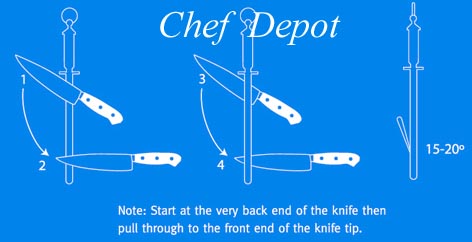
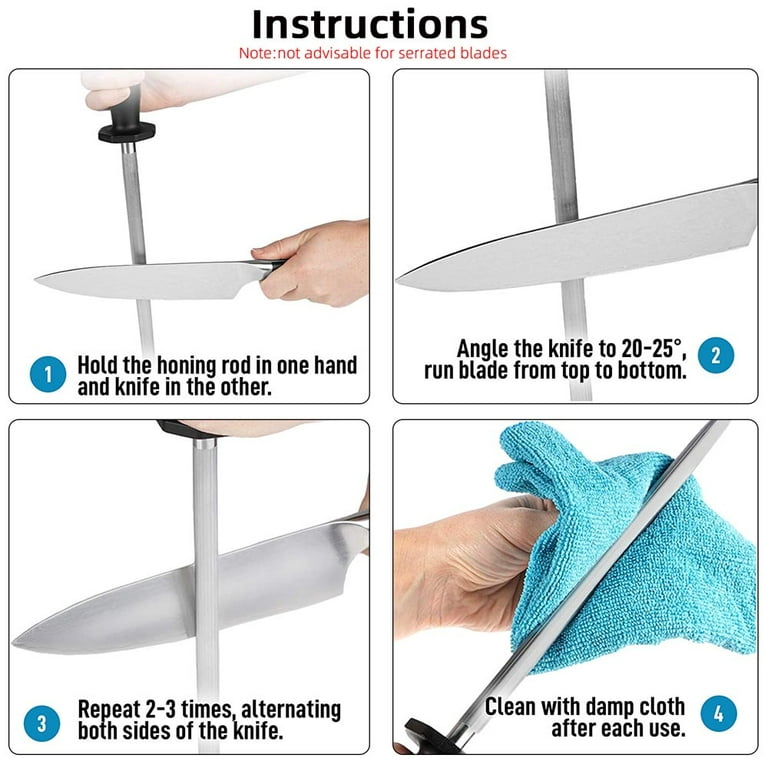
- Hold the rod vertically on a stable surface. The tip should touch the towel or guard.
- Grip the knife: Hold it at the heel (the thick base near the handle).
- Angle the blade: The most important step. Hold the knife at a 15–20 degree angle to the rod. This is about the thickness of two stacked coins.
- Draw the blade down: Starting at the heel, pull the knife down and across the rod, ending at the tip. This should feel smooth, not forced.
- Repeat on the other side: Switch hands or turn the knife to repeat the motion on the opposite edge.
- Alternate sides: Do 5–8 strokes per side. More isn’t always better; too many strokes can wear the edge.
- Check the sharpness: Test by slicing a sheet of paper or a tomato. The knife should cut cleanly.
Common Mistakes Beginners Make
- Wrong angle: Too flat or too steep can dull the blade.
- Too much force: Pressing hard damages the rod and knife.
- Uneven strokes: Doing more strokes on one side creates a lopsided edge.
- Skipping cleaning: Dirt and food particles scratch the knife.
Practical Example: Sharpening A Chef’s Knife
Let’s say you have a chef’s knife. It’s the most used tool in the kitchen, so it often needs honing.
- Place your steel rod vertically on the cutting board.
- Hold the knife at a 17-degree angle. If you’re unsure, use a guide or picture.
- Draw the blade from heel to tip, making sure the edge stays in contact with the rod.
- Repeat on both sides, alternating strokes.
- After 6–8 strokes per side, test your knife on a tomato. If it slices easily, you’re done.
If your knife still feels dull, you may need to sharpen it with a whetstone or a professional service.
Safety Tips
Sharpening with a rod can be safe if you follow these rules:
- Keep fingers away from the blade’s edge.
- Work slowly until you’re confident.
- Use a towel or rod guard to prevent slipping.
- Store rods safely: Don’t leave them loose in drawers.
Most knife accidents happen when the blade is dull or when people rush the sharpening process. Take your time, and your knives will stay sharp and safe.
How Often Should You Sharpen?
How often you need to hone or sharpen depends on how much you cook:
- Daily cooks: Hone every week, sharpen every 6 months.
- Occasional cooks: Hone every month, sharpen once a year.
Professional kitchens hone knives every day. For home cooks, regular honing will keep your knives in good shape.
Signs Your Knife Needs Sharpening
- Struggles to cut tomatoes or onions.
- Feels rough or catches on food.
- Leaves squashed or torn slices.
If you notice these signs, it’s time to sharpen.
Choosing The Right Rod
If you’re buying a rod for the first time, consider:
- Length: 9–12 inches is best for kitchen knives.
- Material: Steel for regular honing, ceramic for sharper results.
- Handle comfort: Choose a rod with a grip that feels good in your hand.
Avoid rods that are too short or have slippery handles. A quality rod will last years.
Credit: chefdepot.net
Sharpening Different Knife Types
Not all knives are the same. Here’s how to hone common types:
- Chef’s knife: Use a 15–20 degree angle, standard strokes.
- Paring knife: Smaller, but same angle. Use gentle strokes.
- Serrated knife: Do not use a rod. These need special sharpening tools.
A bread knife or serrated knife should not be sharpened with a rod. If your serrated knife is dull, take it to a professional.
Comparing Sharpening Rods And Other Tools
Many people wonder if a rod is enough. Here’s how rods compare to other sharpening tools:
| Tool | Use | Speed | Skill Level | Best For |
|---|---|---|---|---|
| Sharpening Rod | Honing | Fast | Beginner | Regular maintenance |
| Whetstone | Sharpening | Slow | Intermediate | Restoring dull knives |
| Electric Sharpener | Sharpening | Very Fast | Beginner | Quick results |
For most kitchens, a sharpening rod plus an occasional whetstone session will keep knives in top shape.
Two Insights Most Beginners Miss
- Sharpening isn’t always needed: Many people over-sharpen, wearing out their knives. Regular honing is often enough.
- Rod maintenance matters: If your rod is dirty or worn, it won’t work well. Clean it monthly and replace every few years.
These tips can save you money and keep your knives working longer.
Sharpening Rod Care
A sharpening rod can last years if you care for it:
- Clean after each use: Wipe with a damp cloth.
- Avoid dropping: Ceramic rods can break.
- Store safely: Use a rod holder or drawer organizer.
If your rod feels rough or has deep scratches, it may be time for a replacement.
When To Seek Professional Help
Sometimes, a knife is too dull or damaged for a rod to fix. In these cases:
- Use a whetstone or electric sharpener.
- Visit a professional sharpening service.
Professional sharpeners use specialized machines and can restore knives that home tools cannot.
For more information on knife sharpening, visit Wikipedia Knife Sharpening.
Frequently Asked Questions
How Do I Know If My Knife Is Sharp Enough?
A sharp knife will cut through paper or a tomato with little effort. If it squashes or tears food, it needs honing or sharpening.
Can I Use A Sharpening Rod On All Kitchen Knives?
You can use a rod on most straight-edged knives like chef’s, paring, and utility knives. Avoid using rods on serrated knives or specialized blades.
How Often Should I Replace My Sharpening Rod?
If your rod is scratched, chipped, or feels rough, replace it. Ceramic rods usually last 2–5 years, steel rods can last longer with care.
What’s The Safest Way To Sharpen With A Rod?
Work slowly, use a stable surface, and keep your fingers away from the blade. Use a towel or guard under the rod to prevent slipping.
Is It Better To Hone Or Sharpen My Knife?
Honing is best for regular maintenance. Sharpen only when honing no longer restores the edge. Over-sharpening wears out your knife faster.
Mastering the use of a sharpening rod makes your kitchen safer, your cooking easier, and your food better. With these steps and tips, you’ll keep your knives in excellent shape for years. Happy cooking!
Credit: www.walmart.com