Skip to content
Choosing the right kitchen knife can change the way you cook. Many home cooks and chefs face a common question: Santoku knife vs Chef knife—which is better? Both knives are popular, versatile, and found in kitchens worldwide. But they are not the same. If you want to cut faster, safer, and more comfortably, knowing their differences is essential. Let’s explore these two kitchen tools in detail so you can pick the best one for your needs.
What Is A Santoku Knife?
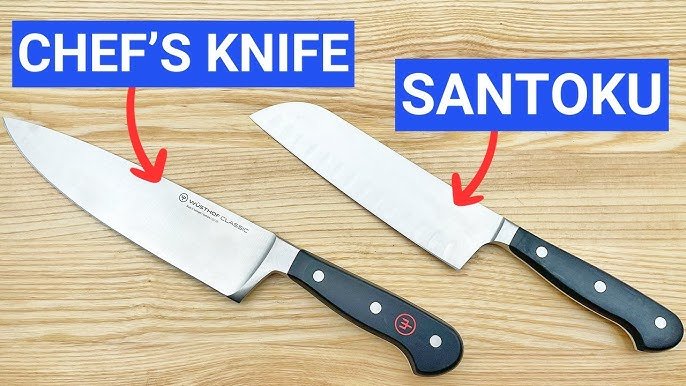
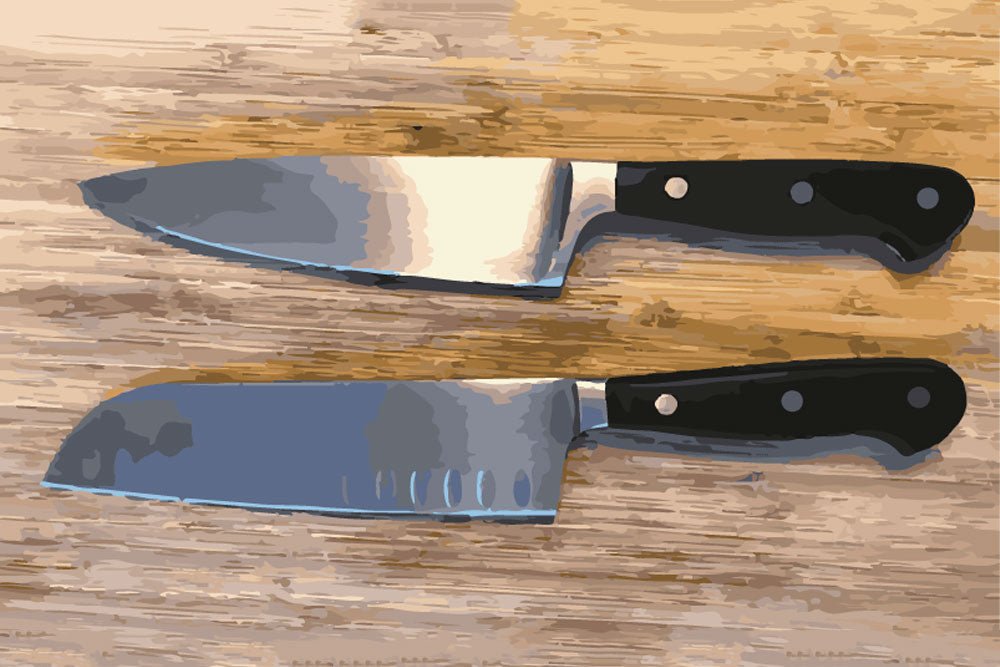
The Santoku knife comes from Japan. The word “Santoku” means “three virtues”—referring to slicing, dicing, and mincing. This knife is usually 5 to 7 inches long, shorter than a typical chef knife. Its blade is flat with a rounded tip. The edge is often straight or only slightly curved, making it easy to cut straight down.
Santoku knives usually have a thinner blade than chef knives. The blade may have small dimples (called Granton edge) to prevent food from sticking. This makes it ideal for cutting sticky foods like potatoes or cheese. Santoku knives are lightweight and easy to handle, especially for people with smaller hands.
What Is A Chef Knife?
The chef knife, also called “cook’s knife,” is a classic Western kitchen tool. Most chef knives are 8 to 10 inches long, with a curved blade and pointed tip. The curve allows for a rocking motion when chopping, which is efficient for cutting herbs and vegetables.
Chef knives are usually heavier and thicker than Santoku knives. They can handle tough tasks, such as cutting meat or chopping hard vegetables. Their design helps with many kitchen jobs, from slicing to crushing garlic. Chef knives are common in both professional kitchens and home settings.
Key Differences Between Santoku And Chef Knives
Let’s look at how these knives compare side by side. Here’s a quick overview:
| Feature | Santoku Knife | Chef Knife |
|---|---|---|
| Origin | Japan | Western (Europe/US) |
| Blade Length | 5–7 inches | 8–10 inches |
| Blade Shape | Flat edge, rounded tip | Curved edge, pointed tip |
| Cutting Style | Straight down, push cut | Rocking motion |
| Weight | Lighter | Heavier |
| Food Sticking | Granton edge reduces sticking | Food may stick more |
How Each Knife Performs In The Kitchen
Santoku Knife Performance
Santoku knives are best for:
- Precision slicing of vegetables, fruit, and boneless meat
- Quick dicing—the flat edge helps make uniform cuts
- Mincing herbs—especially with the straight blade
Because they are lighter and shorter, Santoku knives are easy to control. They work well for people who prefer a simple, downward cutting motion. However, they are not ideal for cutting through bones or very thick foods.
Chef Knife Performance
Chef knives excel at:
- Chopping large vegetables such as cabbage, squash, and onions
- Slicing meat and poultry—including tougher cuts
- Rocking cuts—the curved blade is perfect for herbs, garlic, and nuts
- Crushing garlic or ginger—the broad blade can be used as a press
Chef knives are strong and durable. They can handle heavy-duty tasks, but their weight may be tiring for some people. The pointed tip helps with tasks like removing seeds or making delicate cuts.
Which Knife Should You Choose?
Deciding between a Santoku and a chef knife depends on your cooking style, hand size, and the foods you prepare most often. Here are some factors to consider:
| Preference | Best Choice |
|---|---|
| Small hands or beginner | Santoku Knife |
| Cooking mostly vegetables | Santoku Knife |
| Large hands or professional | Chef Knife |
| Meat and tough foods | Chef Knife |
| All-purpose use | Chef Knife |
If you prepare a lot of Asian food or want lighter, more precise cuts, the Santoku is a good choice. If you cook Western dishes, or need a knife that can handle many tasks, the chef knife is better.
Common Mistakes When Choosing
Many beginners make mistakes when buying kitchen knives. Here are some to avoid:
- Ignoring hand size: A large chef knife may feel heavy and awkward for small hands.
- Choosing based on looks: Attractive knives may not perform well.
- Not testing the grip: If the handle feels uncomfortable, you won’t use the knife often.
- Overlooking blade material: Both knives come in stainless steel, carbon steel, or ceramic. Each has pros and cons.
- Buying sets without research: Sets may include knives you never use. Focus on one good all-purpose knife first.
Many people also forget to consider maintenance. Santoku knives often need less sharpening due to their thinner blades, but they can be more fragile. Chef knives are sturdy but require regular sharpening.
Knife Materials And Durability
Most Santoku and chef knives are made from stainless steel or carbon steel. Stainless steel resists rust and is easy to care for. Carbon steel is sharper and holds its edge longer but can rust if not dried quickly.
Some high-end knives use ceramic blades. These are very sharp but can chip easily. For most home cooks, stainless steel is the best choice.
Handle materials vary too. Wood handles are comfortable, but may crack over time. Plastic handles are durable and easy to clean. Metal handles last long but can be slippery when wet.
Price And Value
Santoku knives can cost anywhere from $20 to $150, depending on the brand and material. Chef knives also range from $25 to $300 or more. Some famous brands include Shun, Wüsthof, and Victorinox.
A good knife does not need to be expensive. Many cooks are happy with knives costing $40–$60. The important thing is to choose a knife that fits your hand, feels balanced, and stays sharp.
Credit: www.youtube.com
Cleaning And Care
Both knives need proper care to last long. Here are some tips:
- Wash by hand, not in the dishwasher.
- Dry immediately to prevent rust.
- Sharpen regularly with a whetstone or steel.
- Store in a knife block or magnetic strip.
Santoku knives may need less sharpening because their thin blades are easier to keep sharp. Chef knives are tougher, but their thick blades can dull faster.
Real-world Examples
A chef working in a French restaurant will likely prefer a chef knife for tasks like cutting steak or chopping herbs. Meanwhile, a home cook making sushi or stir-fry will find a Santoku knife more useful for thin slicing and quick dicing.
In a busy kitchen, both knives can be used side by side. Many professionals keep both, switching depending on the task. For example, a chef might use the Santoku for preparing vegetables, then switch to the chef knife for meat.
Non-obvious Insights
- Blade Angle Matters: Santoku knives usually have a sharper blade angle (12–15 degrees), while chef knives are often sharpened at 20–22 degrees. This means Santoku knives cut more cleanly, but are more delicate.
- Weight Distribution: The balance of a chef knife is often centered, making it easier to chop quickly. Santoku knives are tip-heavy, which helps with precision but can feel odd at first.
- Cutting Board Compatibility: The flat blade of a Santoku works better with hard, flat cutting boards. Chef knives adapt to all surfaces due to their curved edge.
Chef Knife Vs Santoku Knife: Which Is Safer?
Safety is important when choosing a kitchen knife. Santoku knives are often safer for beginners because their shorter length and flat blade reduce the risk of slipping. Chef knives, with their sharp tip, can cause accidents if not handled properly.
However, chef knives are easier to control when cutting large foods.
Always keep your knives sharp—dull knives slip and cause injuries. Use the right knife for the right task, and never cut towards your hand.
Credit: santokuknives.co.uk
Comparison Table: Santoku Knife Vs Chef Knife In Different Tasks
Here’s a practical look at how each knife performs for common kitchen jobs:
| Task | Santoku Knife | Chef Knife |
|---|---|---|
| Slicing vegetables | Excellent | Excellent |
| Dicing onions | Very Good | Excellent |
| Chopping herbs | Good | Excellent |
| Cutting meat | Good (boneless) | Excellent (all types) |
| Crushing garlic | Not ideal | Excellent |
| Cutting bones | Poor | Good |
When To Use Both Knives
Some cooks use both knives for different tasks. For example:
- Use the Santoku knife for thin slices of cucumber, carrot, and fish.
- Switch to the chef knife for chopping large onions, cutting chicken, or mincing herbs.
If you can afford only one knife, start with a chef knife. If you want more precision, add a Santoku knife to your collection.

Credit: imarku.net
How To Test Before Buying
When shopping for a knife, try these simple tests:
- Grip: Hold the handle. It should feel comfortable and not slippery.
- Balance: Place the knife on your finger at the base of the blade. It should balance evenly.
- Weight: Choose a weight that feels easy to lift and control.
- Cutting test: If possible, cut an onion or potato in the store. Notice how easily the knife slices.
Buying online? Read reviews and check return policies. For more info, see this Wikipedia kitchen knife guide.
Frequently Asked Questions
What Is The Main Difference Between A Santoku Knife And A Chef Knife?
The main difference is the blade shape. Santoku knives have a flat edge and rounded tip, while chef knives have a curved edge and pointed tip. This affects how you cut—Santoku is best for straight, downward cuts, while chef knives are ideal for rocking motions.
Can I Use A Santoku Knife For All Kitchen Tasks?
You can use a Santoku knife for most jobs like slicing, dicing, and mincing. But it is not good for heavy tasks, such as cutting bones or large meat pieces. For all-purpose cooking, a chef knife is more versatile.
Which Knife Stays Sharp Longer?
Santoku knives usually have thinner blades and sharper angles. They can stay sharp longer with proper care, but are more delicate. Chef knives need regular sharpening but are more durable.
Are Santoku Knives Safer For Beginners?
Yes, Santoku knives are often safer for beginners because their shorter blade and straight edge make them easier to control. However, proper handling and keeping the blade sharp are always important.
How Much Should I Spend On A Good Kitchen Knife?
Most home cooks find a good knife between $40 and $60. High-end knives can cost much more, but price does not always mean better performance. Choose based on comfort, balance, and blade quality.
Choosing between a Santoku knife and chef knife is about understanding your needs. Both are excellent tools, but your cooking style, hand size, and main foods matter most. Try both if you can, and enjoy the improvement in your kitchen.