Skip to content
Sous vide cooking has become popular in homes and restaurants. This method uses precise temperature control to cook food in a water bath, usually inside a vacuum-sealed bag. Many people love sous vide because it gives juicy, tender results and helps prevent overcooking.
But, there are important food safety rules to follow. Cooking at low temperatures for long periods can create risks if not done properly. Understanding sous vide food safety is essential for anyone who wants to enjoy this technique without worry.
What Is Sous Vide Cooking?
Sous vide is a French term meaning “under vacuum.” In this method, food is placed in a vacuum-sealed bag and cooked in a water bath at a controlled temperature. Unlike traditional cooking, sous vide often uses lower temperatures, usually between 120°F and 185°F. This gentle heat allows flavors to develop and textures to improve.
For example, a steak cooked sous vide at 135°F for two hours stays juicy and evenly cooked. Vegetables can be cooked at higher temperatures to keep their color and crunch. However, low temperatures can allow harmful bacteria to survive if not handled correctly.
Why Food Safety Matters In Sous Vide
With traditional cooking, high temperatures kill bacteria quickly. Sous vide relies on precision and time to achieve safety. If the temperature is too low or the cooking time too short, dangerous microorganisms may not be destroyed. Common risks include:
- Salmonella
- Listeria
- Clostridium botulinum
Each of these bacteria can cause severe illness. Sous vide food safety means you must understand how temperature and time work together to keep food safe.
The Temperature-time Relationship
Sous vide safety depends on both temperature and cooking time. Higher temperatures kill bacteria faster, but sous vide often uses lower heat. To compensate, food must cook for longer periods.
Here is a comparison of how different temperatures and times affect bacteria reduction:
| Temperature (°F) | Minimum Time for Safety (minutes) | Bacteria Reduction (log) |
|---|---|---|
| 130 | 112 | 6-log |
| 135 | 68 | 6-log |
| 140 | 23 | 6-log |
| 145 | 9 | 6-log |
A 6-log reduction means 99.9999% of bacteria are destroyed. This is the standard for safe cooking.
Choosing The Right Sous Vide Equipment
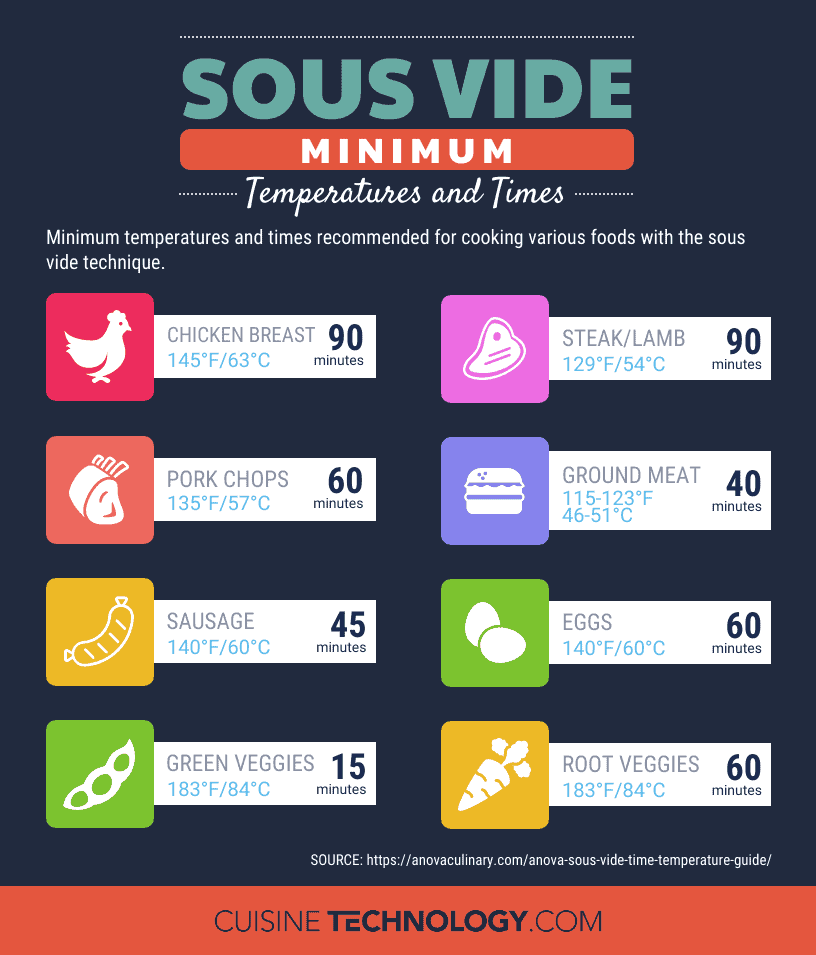
Not all sous vide machines are equal. Safety depends on precise temperature control and consistent heating. When selecting equipment, look for:
- Accurate thermostat: Your machine must keep water within 1°F of the set temperature.
- Reliable circulation: Water movement ensures even heat.
- Vacuum sealing: Bags must be properly sealed to avoid leaks and contamination.
- Easy cleaning: Machines and accessories should be simple to sanitize.
Popular brands include Anova, Joule, and SousVide Supreme. Cheaper models may lack good temperature control, leading to safety risks.
Credit: cuisinetechnology.com
Safe Food Preparation Steps
Preparing food for sous vide is not just about cooking; it starts before you turn on your machine. Follow these steps for safety:
- Wash hands and surfaces: Always clean hands, utensils, and work areas before handling food.
- Trim and portion: Cut meat and vegetables to the desired size. Smaller pieces cook more evenly.
- Season and bag: Add seasonings, then place food in a clean vacuum bag.
- Vacuum seal: Remove as much air as possible. Air pockets can harbor bacteria.
- Preheat water bath: Make sure water reaches the target temperature before adding food.
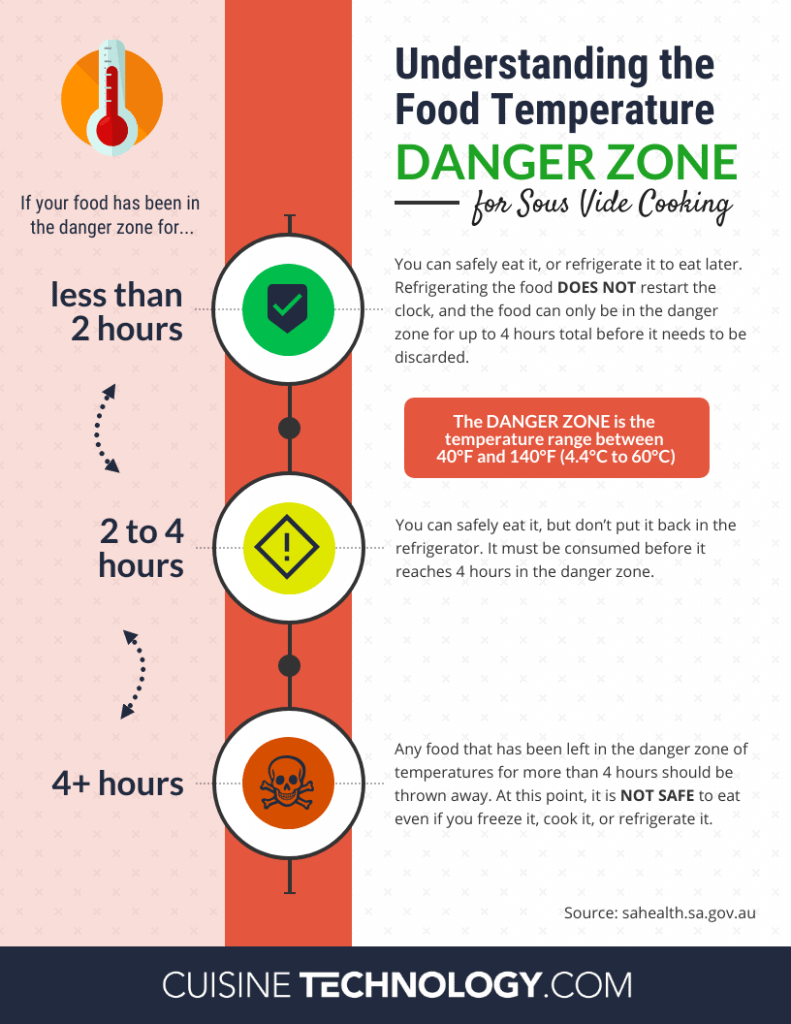
Some beginners forget to preheat the water. Adding food to cool water increases time in the “danger zone” (40°F–130°F), where bacteria grow fastest.
Handling Poultry, Beef, Fish, And Eggs Safely
Different foods need different care. Sous vide allows flexibility, but safety rules change depending on what you cook.
| Food Type | Safe Minimum Temperature (°F) | Recommended Cooking Time | Special Considerations |
|---|---|---|---|
| Poultry | 150 | 1–2 hours | Salmonella risk; finish with sear |
| Beef | 130 | 1–4 hours | Trichinella risk in rare meat |
| Fish | 140 | 30–60 minutes | Anisakis parasite risk |
| Eggs | 145 | 45–60 minutes | Eggshells must be clean |
For eggs, the shell is often not sanitized. Wash eggs before cooking, or buy pasteurized eggs to reduce risk.
Preventing Cross-contamination
Cross-contamination can happen when bacteria move from one food to another. Sous vide cooking uses sealed bags, but mistakes are still possible. Protect your food by:
- Using separate bags for different foods
- Never reusing bags
- Washing hands after handling raw meat
- Storing cooked and raw foods separately
A common beginner mistake is reusing bags or utensils without washing. This can spread bacteria and ruin your meal.
Cooling And Storing Sous Vide Food
After cooking sous vide, some people serve food right away. Others chill it for later use. Proper cooling and storage are critical for safety.
Quick Cooling
Hot food left at room temperature can allow bacteria to grow. To cool sous vide food:
- Remove the bag from the water bath.
- Place the bag in an ice water bath (50% ice, 50% water).
- Cool for at least 30 minutes before refrigerating.
Storage Tips
- Store food below 40°F
- Label bags with date and contents
- Eat within 3–4 days for best safety
If you want to freeze sous vide food, cool it quickly first, then freeze in the sealed bag. This keeps the texture and flavor intact.
Credit: cuisinetechnology.com
Reheating Sous Vide Food Safely
Reheating sous vide food is easy, but you must do it safely. Never leave food in the “danger zone” (40°F–130°F) for more than 2 hours. Use these methods:
- Place the sealed bag in a hot water bath set to the original cooking temperature
- Reheat only as much as you need; avoid reheating multiple times
Avoid microwaving in the bag, as uneven heating can leave cold spots where bacteria survive.
Dealing With Vacuum Bags And Sous Vide Plastics
Sous vide uses plastic bags to seal food. Not all plastics are safe for cooking. Look for bags labeled food-safe or BPA-free. Avoid bags not intended for heat, as chemicals may leach into your food.
Here is a comparison of common sous vide bag materials:
| Bag Type | BPA-free | Heat Resistance | Recommended Use |
|---|---|---|---|
| Vacuum-seal bags | Yes | Up to 195°F | Meat, fish, vegetables |
| Zip-top freezer bags | Varies | Up to 175°F | Short cooks, lower heat |
| Silicone bags | Yes | Up to 400°F | Reusable, eco-friendly |
Silicone bags are reusable and eco-friendly, but are more expensive. Vacuum-seal bags work best for most sous vide recipes.
Food Safety Regulations For Sous Vide
Government guidelines help set safe standards for sous vide cooking. The USDA recommends cooking poultry to at least 165°F. However, sous vide relies on longer times at lower temperatures to achieve the same safety.
The FDA Food Code lists rules for restaurants using sous vide. Home cooks should follow these, too:
- Use food-safe bags
- Keep water bath above 130°F
- Cook long enough to reach safe reduction of bacteria
- Cool food quickly after cooking
For more information, see the FDA Food Code.
Common Sous Vide Food Safety Mistakes
Even experienced cooks can make mistakes. Watch out for these errors:
- Using the wrong temperature: Setting the water bath too low is risky.
- Skipping preheating: Always heat water before adding food.
- Not vacuum sealing properly: Air pockets can let bacteria survive.
- Cooling too slowly: Quick chilling is essential for leftovers.
- Ignoring bag quality: Use only bags made for sous vide.
A less obvious mistake is storing sous vide food for too long. Even in a vacuum, bacteria can grow if the food is not kept cold.

Credit: www.amazingfoodmadeeasy.com
Non-obvious Tips For Sous Vide Safety
Many guides skip these important points:
- Double-bagging: If you notice leaks, double-bag the food. Even a small hole can introduce bacteria.
- Salt and acid: Seasoning with salt or adding acidic ingredients (like lemon juice) can reduce bacterial growth, especially for fish and poultry.
- Check water level: Long cooks can evaporate water. If the water drops below the bag, uneven heating occurs.
Frequently Asked Questions
Is It Safe To Cook Rare Meat With Sous Vide?
Yes, as long as you use the correct time and temperature. Cooking beef at 130°F for at least 2 hours achieves a safe reduction of bacteria.
Can I Sous Vide Frozen Food?
You can, but add extra time. Frozen food takes longer to reach the target temperature. Always check that the core temperature is safe.
What Happens If My Sous Vide Machine Loses Power?
If power is lost, bacteria can multiply quickly. Restart the process and reheat to a safe temperature and time. If the food was in the danger zone for more than 2 hours, discard it.
Are Sous Vide Eggs Safe To Eat?
Sous vide eggs are safe if cooked at 145°F for at least 45 minutes. Clean the eggshells before cooking, or use pasteurized eggs.
How Long Can I Store Sous Vide Food?
Chilled sous vide food lasts 3–4 days in the fridge. For longer storage, freeze after cooling. Always label bags with date and contents.
Sous vide cooking can be safe and delicious if you pay attention to time, temperature, and preparation. The key is using reliable equipment, following safe practices, and avoiding shortcuts. By understanding sous vide food safety, you can enjoy perfect meals with confidence, knowing your food is not only tasty but also safe for everyone at the table.