Skip to content
Keeping your kitchen safe and clean starts with small habits. One of the most important is how you store your clean cutting boards. It sounds simple, but storing them the wrong way can lead to bacteria, mold, or even warping. Many people think any shelf or drawer is fine, but that’s not true. The way you store cutting boards affects their lifespan, your health, and even the look of your kitchen.
If you’ve ever wondered why some cutting boards smell or feel sticky after cleaning, or why mold appears in corners, the answer is often poor storage. In this guide, you’ll discover the best places and methods to safely store clean cutting boards, why it matters, and common mistakes to avoid.
You’ll learn practical tips to keep your boards dry, sanitary, and ready for use. Whether you use wood, plastic, or bamboo boards, this article will help you make better choices for your kitchen.
Why Safe Storage Matters
Cutting boards come into contact with raw meat, vegetables, and many other foods. Even after washing, if you store them incorrectly, bacteria and mold can grow. According to the USDA, foodborne illnesses often start in home kitchens, with cross-contamination being a major factor. A moist or closed environment allows germs to multiply quickly.
Safe storage doesn’t just protect your health. It also keeps your boards in good shape. Wood boards can warp or crack if stored damp. Plastic boards may stain or smell. Taking care with storage means you won’t need to replace boards as often, saving money and reducing waste.
Key Factors For Safe Cutting Board Storage
Several factors decide whether your cutting board storage is safe:
- Airflow: Boards must dry completely after washing. Poor airflow encourages mold and bacteria.
- Sanitation: Boards should be kept away from dirty dishes and cleaning supplies.
- Accessibility: You need to reach boards easily, but avoid high-traffic spots where they can get dirty.
- Material: Wood, plastic, and bamboo boards each need slightly different care.
- Humidity: Kitchens can be humid. Boards stored in damp places are at higher risk for mold.
Let’s look at each factor in more detail.
Airflow: The Most Important Element
Drying is the single most important step before storing a board. Even a tiny bit of moisture can cause problems. Experts recommend letting boards air dry upright, not flat, so both sides dry evenly. This is especially true for wood and bamboo, which absorb water.
Sanitation: Separation Matters
Don’t store clean cutting boards near dirty dishes, trash, or cleaning supplies. Cross-contamination is easy in busy kitchens. Boards should have their own space, preferably away from sinks and garbage bins.
Accessibility: Convenience Vs. Cleanliness
Store boards where you can reach them quickly, but not where they get splashed or touched often. High-traffic areas near sinks, stoves, or prep counters can be risky. It’s better to use a dedicated rack or shelf.
Material: Wood Vs. Plastic Vs. Bamboo
Different materials need different storage:
- Wood: Needs airflow, should never be stacked flat.
- Plastic: Can handle more moisture, but still needs to dry fully.
- Bamboo: Similar to wood, but slightly less prone to warping.
Humidity: Kitchen Environment
If your kitchen is humid, boards dry more slowly. Consider storing them near a window or using a fan to speed drying.
Best Places To Store Clean Cutting Boards
Choosing the right place is key. Here are the safest options:
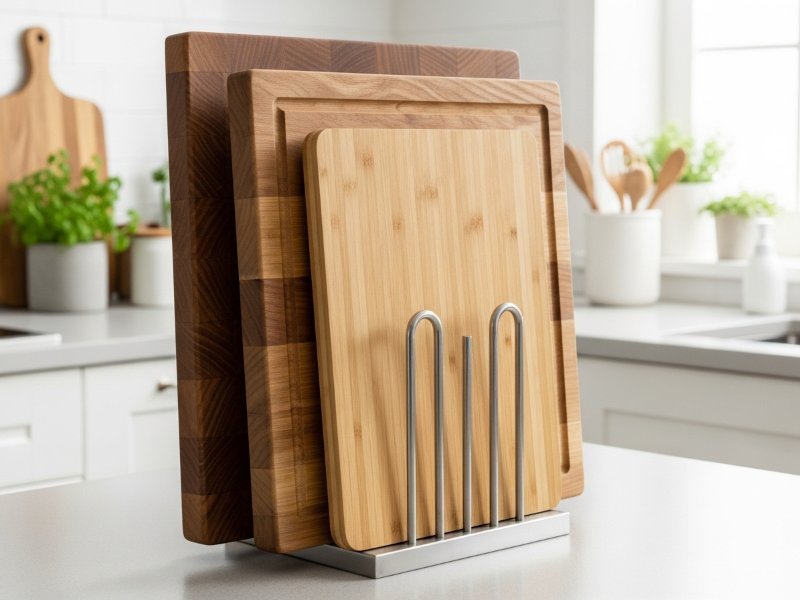
- Vertical Racks: These hold boards upright, letting air reach all sides. You can buy metal or wood racks, or use a simple wire organizer. Place racks near, but not right next to, your sink.
- Wall Hooks: Sturdy hooks can hold boards by their handles. This keeps boards off counters and lets them dry naturally.
- Open Shelves: If you use shelves, make sure boards stand upright with space between each board.
- Pull-Out Drawers: Some modern kitchens have special drawers with slots for boards. Make sure these have vents for airflow.
- Countertop Stands: These are small holders that sit on your counter. They’re good for quick access, but only if you keep counters clean and dry.
Avoid storing boards flat in closed cabinets unless you’re sure they’re completely dry. Closed spaces trap moisture and encourage bacteria.
Comparing Storage Methods
To help you choose, here’s a comparison of common storage methods:
| Storage Method | Airflow | Sanitation | Space Needed | Best For |
|---|---|---|---|---|
| Vertical Rack | Excellent | High | Medium | All board types |
| Wall Hook | Good | High | Low | Boards with handles |
| Open Shelf | Fair | Medium | High | Large kitchens |
| Pull-Out Drawer | Variable | High | Medium | Modern kitchens |
| Countertop Stand | Good | Medium | Low | Quick access |
Safe Storage Practices For Different Board Types
Wood Cutting Boards
Wood boards are popular for their durability and look. They require extra care because wood absorbs water. Always dry wood boards upright. Never stack them flat or put them away damp.
- Store on a vertical rack or hang on a wall hook
- Keep away from dishwashers and sinks
- Oil boards regularly to prevent cracks
Wood boards can last decades if stored right. But if you see cracks, black spots, or smells, inspect for mold and replace if needed.
You might find this helpful: Best Wooden Cutting Boards
Plastic Cutting Boards
Plastic boards are easier to clean and less likely to warp. Still, they need to dry fully before storage.
- Store in a vertical rack or a pull-out drawer
- Check for deep cuts or stains (these can hold bacteria)
- Replace when grooves become hard to clean
Plastic boards can go in the dishwasher, but always dry before storing.
Bamboo Cutting Boards
Bamboo is eco-friendly and resists bacteria better than wood. It still needs to be stored dry.
- Store upright on a rack or hook
- Avoid soaking in water
- Oil occasionally, but less than wood
Bamboo boards are lighter, so wall hooks are a good option.
Common Mistakes In Cutting Board Storage
Many people make mistakes that seem harmless but can cause issues. Here are the most common:
- Storing boards wet: Moisture is a breeding ground for bacteria.
- Stacking boards flat: Blocks airflow, especially for wood.
- Using closed cabinets: Unless well-ventilated, these trap humidity.
- Mixing dirty and clean boards: Easy way to spread germs.
- Ignoring small cracks or stains: These are signs of bacteria or mold.
A non-obvious mistake is storing boards near heat sources. Heat can warp boards, especially wood and bamboo. Also, storing boards on a damp towel or mat is risky. The towel stays wet and keeps boards damp.
Data: How Storage Affects Board Lifespan
A study by the National Sanitation Foundation (NSF) found that boards stored upright lasted up to 2 years longer than those stored flat. Boards stored in humid cabinets showed mold growth in just 3 weeks, while boards with good airflow stayed mold-free for months.
Here’s a summary:
| Storage Method | Average Lifespan | Mold Risk |
|---|---|---|
| Upright (Rack/Hook) | 5 years | Low |
| Flat (Cabinet) | 3 years | High |
| Open Shelf (Standing) | 4 years | Medium |
Cleaning Before Storage: Essential Steps
Safe storage starts with proper cleaning. Here’s how to clean boards before storing:
- Wash with hot, soapy water after every use.
- Sanitize with a mild bleach solution (1 tablespoon per gallon of water) for boards used with meat.
- Rinse thoroughly and wipe dry with a clean towel.
- Air dry upright for at least 30 minutes before storing.
For wood and bamboo, oil the board every few weeks. This keeps water from soaking in and prevents cracks.

Credit: www.amazon.com
Organizing Multiple Cutting Boards
Many kitchens use several boards for different foods. Here are tips to organize them safely:
- Assign a board for each food group (meat, vegetables, bread)
- Label boards with stickers or colors
- Store boards separately to avoid cross-contamination
- Use racks with dividers
Some commercial kitchens use color-coded boards: red for meat, green for vegetables, blue for fish, etc. This helps prevent mistakes.
Storage Tips For Small Kitchens
If you have a small kitchen, space is limited. But safe storage is still possible:
- Use wall hooks to hang boards vertically
- Install a slim rack inside a cabinet door
- Choose multi-purpose stands that hold boards and knives
- Avoid stacking boards on top of each other
A useful trick is to use a magnetic strip for boards with metal handles. This keeps boards off the counter and frees up space.
Advanced Storage Solutions
For those who want to invest in safer storage, consider:
- Custom pull-out drawers with vents for airflow
- Built-in wall racks designed for cutting boards
- Antimicrobial racks that kill bacteria on contact
These options are more expensive but offer extra safety and convenience. If you’re remodeling your kitchen, ask your designer about board storage.
Real-life Example: Restaurant Kitchens
Restaurants handle dozens of cutting boards daily. They use vertical racks with labels and wash boards between uses. Boards are checked for cracks and stains, and replaced often. Home cooks can learn from these practices: keep boards upright, dry, and separated.

Credit: www.amazon.com
Non-obvious Insight: Seasonal Changes Affect Storage
Humidity changes with the seasons. In summer, boards dry faster, but in winter, kitchens may be more humid. Adjust your storage by moving boards closer to windows or using a fan. This small change can keep boards mold-free year-round.
Recommended External Resource
For more tips on kitchen sanitation, visit CDC Food Safety.
Credit: koppenhouse.com
Frequently Asked Questions
How Long Should I Let A Cutting Board Dry Before Storing?
Let boards air dry upright for at least 30 minutes after cleaning. Wood and bamboo need more time, sometimes up to 2 hours. Never store boards while damp.
Can I Store Cutting Boards In A Closed Cabinet?
You can, but only if the boards are completely dry and the cabinet has good ventilation. Otherwise, closed spaces trap moisture and increase mold risk.
Is It Safe To Hang Cutting Boards On Wall Hooks?
Yes, as long as the hooks are clean and sturdy. Boards with handles are easy to hang. Make sure they don’t touch dirty surfaces or splash zones.
Do I Need Separate Boards For Meat And Vegetables?
It’s safer to use separate boards. This prevents cross-contamination and keeps your boards cleaner. You can label or color-code boards for easy identification.
How Often Should Cutting Boards Be Replaced?
Replace boards when you see deep grooves, cracks, or stains that won’t wash out. Wood boards can last 5–10 years with care, while plastic boards usually last 2–5 years.
Safe storage is more than just putting boards away. It’s about protecting your health, keeping your kitchen tidy, and making your tools last longer. By storing clean cutting boards upright, in dry, ventilated spaces, and away from dirty items, you’ll avoid bacteria, mold, and other problems.
Use racks, hooks, or drawers that suit your kitchen size and board type. Small changes in storage can make a big difference in safety and board lifespan. Remember, a clean board is only safe if it’s stored the right way.