Skip to content
If you’ve ever stood in your kitchen staring at a digital scale and wondering, “are kitchen scales accurate?” you’re not alone. The short answer is yes, most modern kitchen scales are accurate enough for home cooking and baking. The longer answer depends on the type of scale you buy, how you use it, and what you’re weighing.
That distinction matters more than you’d think. A few extra grams of flour or water can change a dough’s texture completely. As of 2026, most mid-range digital scales sold for home use hold a tolerance of ±1 gram at capacities up to 5 kilograms.
That’s well within what any home recipe needs. Once we break down how they work, you’ll know exactly what to trust.
Quick Answer: Yes, But Only If You Buy the Right Kind
Yes, kitchen scales are accurate for home use. Digital models usually hit within ±1 gram. Mechanical spring scales drift and are less reliable.
Buy a digital scale with a tare function and keep the batteries fresh.
Why This Comparison Matters More Than You Think
Most home recipes still list ingredients in cups and spoons, but that system is packed with guesswork. A cup of flour can weigh anywhere from 110 to 150 grams, depending on how you scoop it. Sugar is denser, so its weight drifts less, but powders like cocoa or baking soda are all over the place.
A scale removes that entire problem.
Measuring Cups vs. Weighing Ingredients: The Real Difference
Recipes written in grams are reliable by design. One hundred grams of flour is exactly that, no matter how it sits in the bowl. Volume measurements change based on compaction, humidity, and scooping method.
That’s why recipe developers and pastry chefs weigh their ingredients.
The difference shows up in everyday cooking, too. Measuring out a portion of pasta for a weeknight meal is far simpler by weight, and a reliable saucepan method takes over from there. Coffee drinkers get the same benefit.
Weighing beans before dialing in your grinder makes your morning cup repeatable, shot after shot.
How Kitchen Scales Actually Work (And Why It Affects Accuracy)
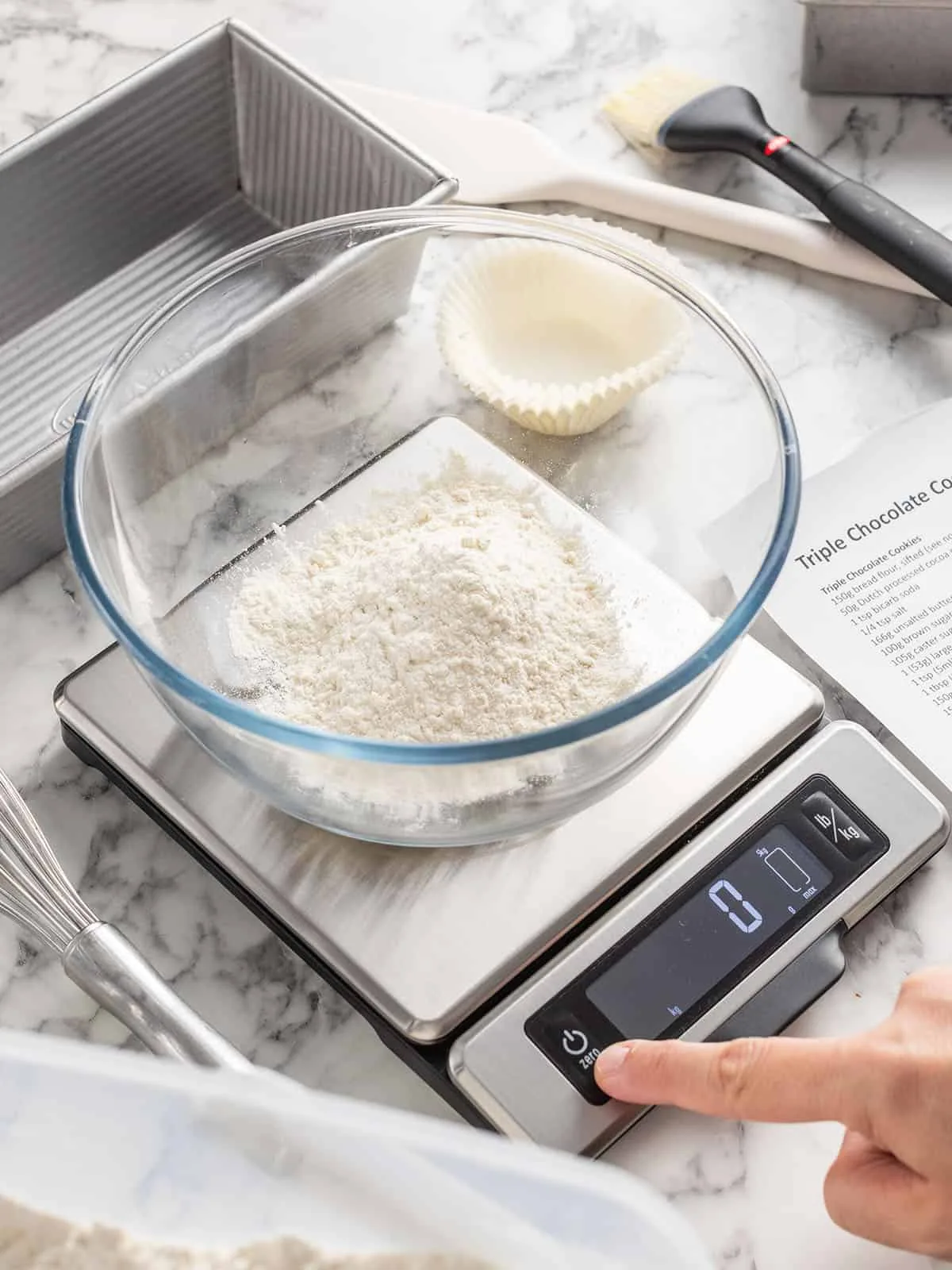
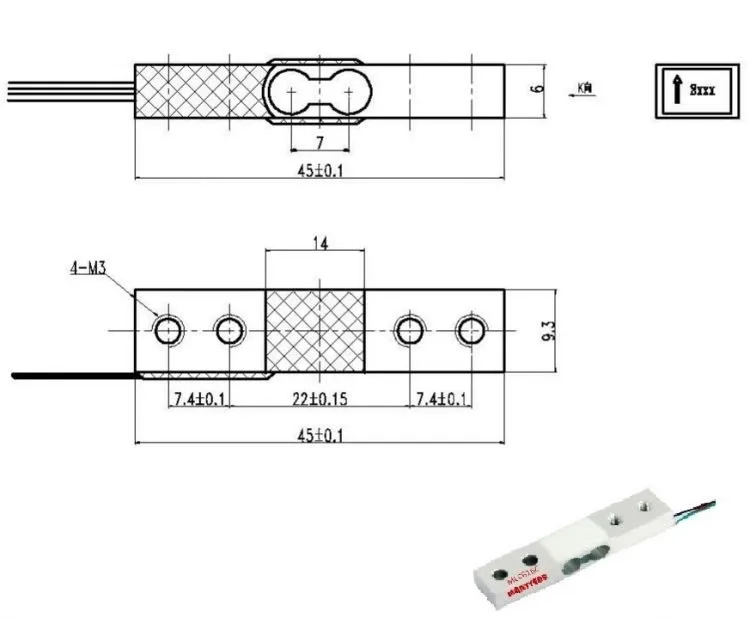
A digital kitchen scale measures weight using a load cell. That’s a small piece of metal with tiny strain gauges attached. When you place something on the platform, the metal bends a microscopic amount, and the gauge measures that deformation.
The scale’s chip converts the signal into the number you see on the display.
This is where accuracy really lives. Cheap scales use lower-quality load cells with looser tolerances. Premium scales use better cells and often include a calibration mode.
If you’re curious about official standards, NIST sets guidelines for weighing instruments that most manufacturers aim to follow.
Load Cell Digital Scales vs. Mechanical Spring Scales
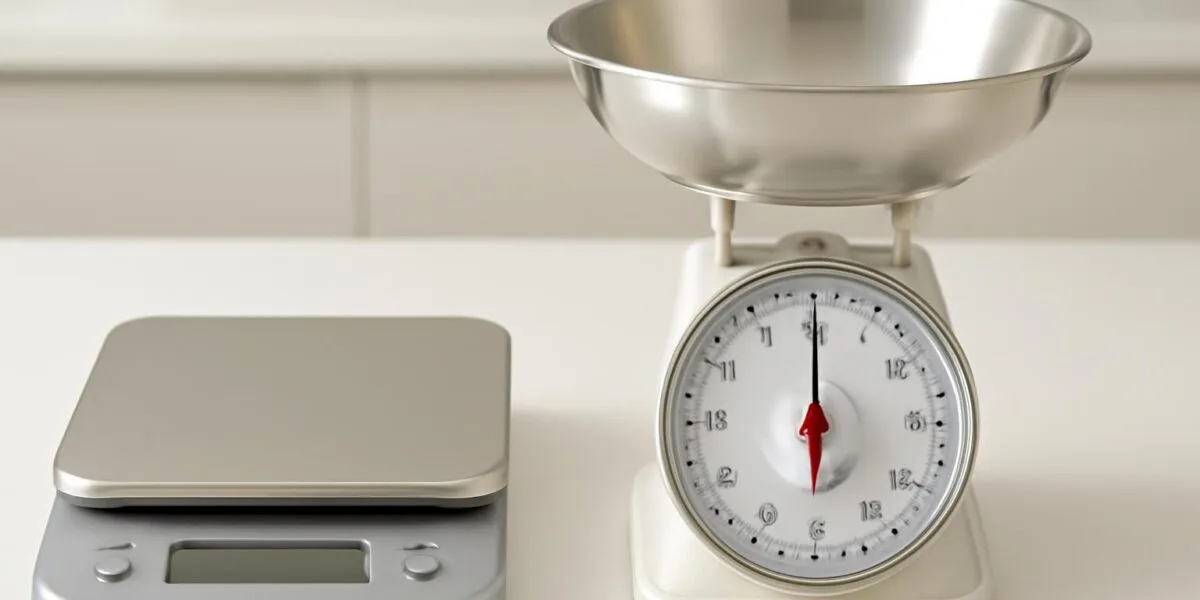
Mechanical spring scales work the old-fashioned way. You place an ingredient on top, a spring compresses, and a needle or dial moves to show the weight. The problem is that springs wear out over time, losing tension and drifting as they age.
They also suffer from “stickiness,” where the needle lags behind or overshoots the actual value. For anything under 10 grams, most spring scales are pure guesswork.
Readability vs. Accuracy: Why 0.1g Is Not the Same as 0.01g
People often confuse readability with accuracy. Readability is the smallest increment a scale can display. Accuracy is how close that reading is to the true weight.
A scale that shows 0.1g increments can still have a ±0.3g error. Higher-resolution scales are usually more accurate, but not always.
For home use, a scale with 1g readability handles most tasks fine. Go with 0.1g if you want to weigh small amounts like yeast, spices, or coffee. That’s the resolution where baking precision really starts to matter.
Digital Scales vs. Mechanical Scales: Which One Can You Trust?
Choose digital. The evidence is clear across every price point. Digital scales are more precise, more repeatable, and far less affected by mechanical wear.
That’s why nearly every modern recipe you’ll find now asks for weight in grams, not cups.
The tradeoffs are worth knowing before you buy:
- Digital scales are accurate to ±1g, easy to read, include a tare function, and switch between units. Downsides: they need batteries and can drift if overloaded.
- Mechanical scales never need power and are hard to break. But springs lose accuracy, small increments are hard to read, and tare functions are rare.
Here’s a fast comparison:
| Feature | Digital Kitchen Scale | Mechanical Spring Scale |
|---|---|---|
| Typical accuracy | ±1g to ±2g | ±5g or worse with age |
| Readability | 1g or 0.1g | 5g or 10g |
| Tare function | Yes | Rarely |
| Battery required | Yes | No |
| Best for | Baking, coffee, portioning | Rough estimates |
If you want a backup way to grind coffee when your main grinder is down, you might wonder whether a food processor is a viable substitute. A scale won’t help you there, but knowing your equipment limits keeps your routine consistent.
Side-by-Side Comparison: Budget Scales vs. Precision Scales
You don’t need to spend a fortune to get an accurate kitchen scale. A $15 model with 1g readability will handle most home cooking just fine. But budget scales can drift more with temperature changes, and their quality control is often inconsistent.
A $40 to $50 scale, like those from OXO, Etekcity, or Escali, usually comes with a better load cell, a sturdier platform, and longer battery life.
Typical Accuracy Tolerances: What ±1g Really Means
A tolerance of ±1g means the reading can be off by up to one gram in either direction. For most recipes, that’s irrelevant. A tablespoon of flour weighs around 7 or 8 grams, so one gram of variance is a small percentage.
For espresso, where you might use 18 grams of coffee, a 1g error is over 5% of the shot. That’s why coffee enthusiasts buy 0.1g scales.
Capacity, Readability, and Real-World Performance
Here’s how the two main tiers stack up:
| Budget Scale | Precision Scale | |
|---|---|---|
| Price | $12–$20 | $35–$60 |
| Readability | 1g | 0.1g |
| Capacity | 5kg | 2–3kg |
| Consistency | Good | Excellent |
| Calibration mode | Sometimes | Yes |
The practical difference comes down to what you measure. If you bake bread or batch-cook, a budget scale is more than enough. If you brew espresso, portion out pre-workout, or follow precise pastry formulas, step up.
And don’t forget the basics: a scale works best when it’s clean and battery-fresh. Just like you’d regularly tackle kettle limescale, a quick wipe and a battery check keep your scale dependable.