Freezing homemade baby food is a smart way for parents to save time and reduce food waste. But what about using glass jars for this purpose? Many families love glass containers because they are reusable, eco-friendly, and don’t leach chemicals.
However, the freezer brings some unique challenges. If you’ve ever wondered, “Can you freeze baby food in glass jars? ”—you’re not alone. This article gives you a complete guide to freezing baby food in glass, the right way to do it, and mistakes to avoid.
Why Parents Choose Glass Jars For Baby Food
Glass jars have become popular for storing baby food. Here’s why many parents prefer them over plastic:
- No chemicals leaching: Glass is non-reactive, so you don’t have to worry about chemicals like BPA or phthalates getting into your baby’s food.
- Reusable and eco-friendly: You can wash and reuse glass jars many times, which is better for the environment.
- No odor or stain: Glass doesn’t hold on to strong smells or colors from food.
- Transparency: You can see exactly what’s inside, which helps with organization.
But glass does have one weakness: it breaks easily, especially when exposed to temperature changes.
Is It Safe To Freeze Baby Food In Glass Jars?
The short answer is yes, you can freeze baby food in glass jars, but you must do it carefully. Not all glass jars are safe for the freezer. If you use the wrong type or freeze improperly, the glass can crack or shatter.
Here’s why this happens:
- Water expands as it freezes. If your jar is too full, the baby food pushes against the glass, causing it to break.
- Thermal shock happens when a glass jar goes suddenly from warm to very cold (or vice versa). This can cause immediate cracking.
But with the right preparation and the right jars, freezing in glass is safe and convenient.
Types Of Glass Jars: Which Are Freezer Safe?
Not every glass container can handle the freezer. Here’s a comparison of common types:
| Type of Glass | Freezer Safe? | Notes |
|---|---|---|
| Mason jars (wide-mouth, straight-sided) | Yes | Best choice; designed for freezing |
| Baby food jars (reused) | No/Not recommended | Thin glass; higher risk of breaking |
| Pyrex/borosilicate glass containers | Yes | Check for freezer symbol |
| Decorative glass jars | No | Not designed for temperature changes |
Wide-mouth mason jars with straight sides are the best choice. They are designed to handle expansion and contraction. Avoid jars with a “shoulder” (where the jar narrows at the top), as frozen food can get stuck and crack the jar.
Step-by-step: How To Freeze Baby Food In Glass Jars
Freezing baby food in glass jars is simple if you follow these steps:
- Choose the right jars: Use freezer-safe, wide-mouth, straight-sided glass jars. Check for a snowflake/freezer symbol on the bottom.
- Cool the food first: Let your cooked baby food reach room temperature before filling jars. Putting hot food directly in the freezer can cause glass to crack.
- Leave headspace: Fill jars only up to ¾ full. Leave at least 1 inch (2.5 cm) of empty space at the top. This is called “headspace” and allows for expansion.
- Seal loosely at first: Place the lids on the jars, but don’t screw them on tightly. This lets air escape as food freezes. Once frozen solid (after 4–6 hours), tighten the lids fully.
- Freeze upright: Stand jars upright in the freezer to avoid leaks and help food freeze evenly.
- Label and date: Write the type of food and the date on each jar. This helps with rotation and safety.
Practical tip: Use small jars (4 oz or less). They freeze faster, thaw evenly, and you can defrost only what you need.
Common Mistakes To Avoid
Many parents make simple mistakes when freezing baby food in glass. Here are the most common, and how to avoid them:
- Overfilling jars: This is the number one reason jars break. Always leave enough headspace.
- Using thin or reused jars: Baby food jars you buy at the store are not made for freezing and break easily.
- Sudden temperature changes: Never move a glass jar directly from hot to cold (or vice versa). Let food and jars cool to room temperature before freezing.
- Storing in the freezer door: The temperature here changes more, increasing the risk of cracks. Store jars deep in the main part of the freezer.
You might find this helpful: Best Glass Jars for Baby Food
How Long Can You Store Baby Food In Glass Jars In The Freezer?
Homemade baby food stays fresh in the freezer for up to 3 months. After that, the food is still safe, but texture and taste may change. Purees with high water content (like fruits and some vegetables) may develop ice crystals or become watery when thawed.
Here’s a quick guide:
| Type of Baby Food | Freezer Life (Months) | Notes |
|---|---|---|
| Fruit purees | 2–3 | May change texture when thawed |
| Vegetable purees | 2–3 | Stir well after thawing |
| Meat/fish purees | 1–2 | Use within 2 months for best quality |
| Mixed meals (e.g. stew) | 1–2 | Check for freezer burn before use |
Thawing Baby Food From Glass Jars Safely
Thawing is just as important as freezing. If you rush, you risk breaking the jar or creating unsafe food. Here’s how to do it right:
- Move to the fridge: The safest method is to transfer the jar from the freezer to the refrigerator. Let it thaw overnight (8–12 hours).
- Warm water bath: If you need to thaw faster, place the sealed jar in a bowl of cold or lukewarm water. Do NOT use hot water, as the temperature shock can crack the glass.
- Microwave caution: Most glass jars are microwave-safe, but you must remove the lid and use low power. Always stir and check the temperature before giving it to your baby.
- Never refreeze: Once thawed, use the baby food within 24–48 hours and do not refreeze.
Non-obvious insight: If you’re in a hurry, don’t microwave the jar directly from the freezer. Instead, let it sit at room temperature for 10–15 minutes first. This reduces thermal shock.
Pros And Cons Of Freezing Baby Food In Glass Jars
Every method has its ups and downs. Here’s a quick overview to help you decide if glass is right for your family:
Pros
- No chemicals: Pure, safe storage for your baby’s food.
- Sustainable: Cuts down on plastic waste.
- Reusable: Lasts for years with proper care.
- No flavor transfer: Keeps food tasting fresh.
- Easy to clean: Can go in the dishwasher.
Cons
- Breakable: Glass can shatter if dropped or handled roughly.
- Heavier: Not as light as plastic for travel.
- Needs careful handling: Must avoid sudden temperature changes.
- More expensive: Higher upfront cost than plastic.
Alternatives To Glass Jars For Freezing Baby Food
If glass jars don’t fit your needs, there are other options:
- Silicone freezer trays: These are flexible, easy to pop out food cubes, and safe for freezing.
- Plastic containers: If you choose BPA-free, freezer-safe plastic, it’s a convenient choice. Always check for the freezer symbol.
- Ice cube trays with lids: Great for portioning small amounts, then transfer cubes to a freezer bag.
Experience-based tip: Many parents freeze baby food in silicone trays, then transfer the cubes to a glass jar in the fridge for serving. This gives you the best of both worlds—easy freezing and safe storage.
Cleaning And Reusing Glass Jars
Proper cleaning keeps your jars safe and extends their life:
- Wash with hot, soapy water: Scrub well to remove any residue.
- Rinse thoroughly: Make sure no soap remains.
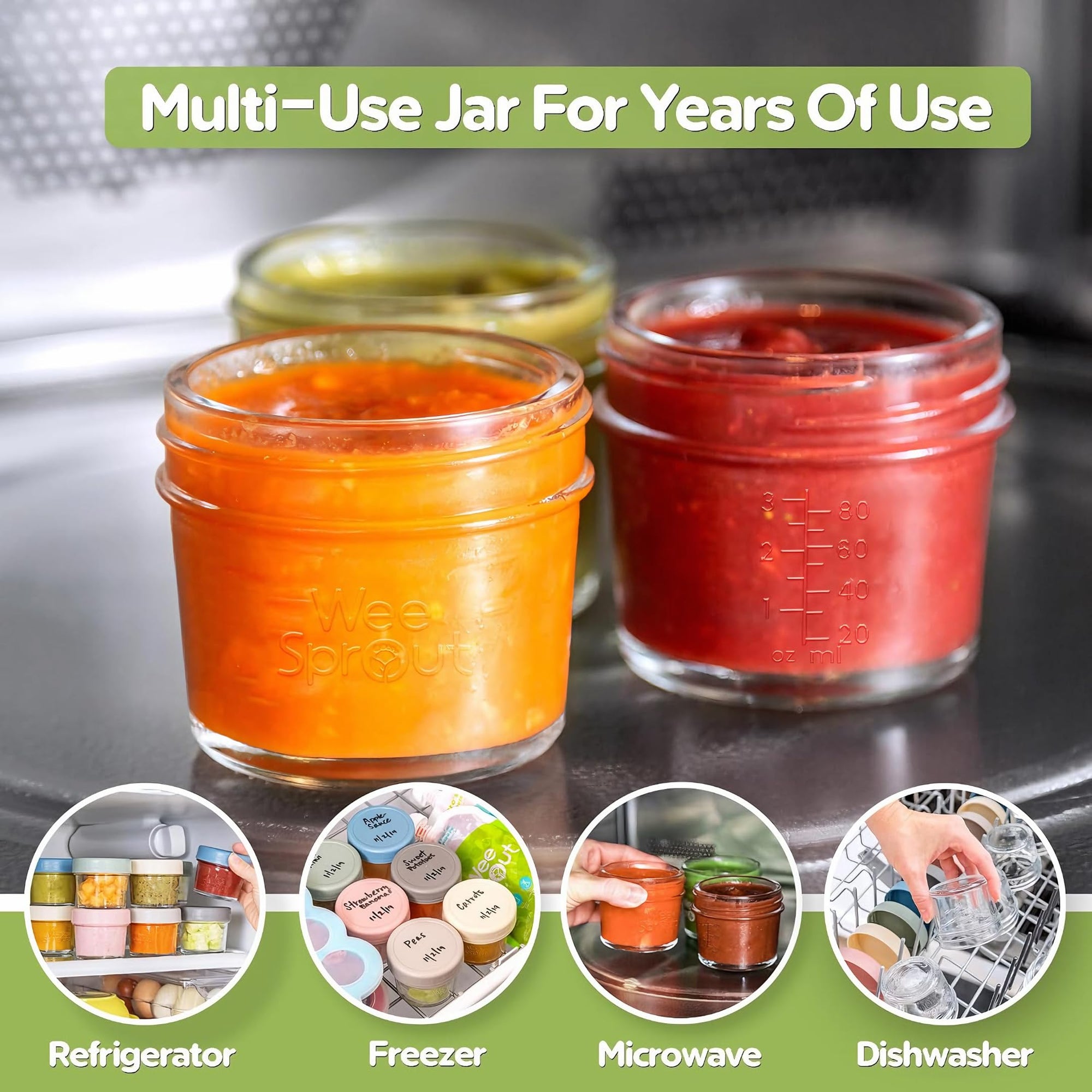
- Dishwasher safe: Most freezer-safe jars are fine in the top rack.
- Check for chips and cracks: Discard any damaged jars—small cracks can break during freezing.
Non-obvious insight: Replace jar lids if they become rusty or warped. A tight seal is essential for safe freezing.
Credit: www.weesprout.com
Signs Of Spoiled Baby Food (and What To Do)
Always check thawed baby food before serving:
- Unusual smell: If it smells sour or “off,” throw it away.
- Change in texture: Some separation is normal; stir well. If you see mold or strange color, discard it.
- Jar damage: If the glass is cracked or the lid is swollen, do not use.
When in doubt, throw it out. It’s not worth the risk.
Real-world Example: Freezing Sweet Potato Puree In Glass Jars
Let’s walk through an example using sweet potato puree:
- Bake or steam sweet potatoes until soft. Mash until smooth.
- Let the puree cool to room temperature.
- Spoon the puree into clean, freezer-safe glass jars, leaving 1 inch of headspace.
- Screw the lids on loosely.
- Place jars upright in the freezer.
- After 6 hours, tighten the lids.
- To thaw, move a jar to the fridge overnight, then warm gently before serving.
This method works for most purees—just remember to adjust headspace for foods that expand more when frozen.
How To Organize Frozen Baby Food In Glass Jars
A cluttered freezer makes life harder. To keep things tidy:
- Arrange jars by type (fruits, veggies, proteins).
- Place newest jars at the back so you use older food first.
- Use stackable jars if possible, but don’t stack too high.
- Keep a small notebook or use a freezer inventory app to track contents and dates.
When Not To Freeze Baby Food In Glass
There are some situations where glass is not a good choice:
- For travel or daycare, lighter, unbreakable containers are safer.
- If your freezer is packed tight, you may risk jars bumping and breaking.
- Chunky foods or foods with lots of liquid (like soups) expand more and need extra headspace.
In these cases, silicone or plastic might be better.

Credit: www.amazon.com
Summary: Is Freezing Baby Food In Glass Jars Right For You?
Freezing baby food in glass jars is safe and practical if you choose the right jars, leave room for food to expand, and avoid temperature shocks. It’s not the only way, but it’s a healthy, eco-friendly option for many families.
If you want chemical-free storage, don’t mind handling glass carefully, and already have the right jars, it can be a great choice.
For more on glass container safety and freezing guidelines, visit the Healthline Guide to Freezing in Glass.
Frequently Asked Questions
Can I Use Recycled Baby Food Jars For Freezing?
No, commercial baby food jars are made from thin glass. They’re not designed to handle expansion from freezing and often crack. Only use jars labeled as freezer-safe.
How Much Headspace Should I Leave In A Glass Jar?
Leave at least 1 inch (2. 5 cm) of empty space at the top of the jar. This prevents pressure from building up and breaking the jar as the food expands.
Is It Safe To Thaw Baby Food In A Glass Jar In The Microwave?
Yes, but always remove the lid first and use low power. Stir the food well to distribute heat evenly. Be cautious—heating too quickly or unevenly can cause the jar to crack or create hot spots.
How Do I Know If My Glass Jar Is Freezer-safe?
Look for a snowflake or “freezer safe” symbol on the bottom. Wide-mouth, straight-sided mason jars are a reliable choice. If unsure, check the manufacturer’s website.
What’s The Best Way To Label Frozen Baby Food Jars?
Use freezer tape or washable labels. Write the type of food and the date frozen. Avoid paper labels—they fall off in moisture.
Freezing baby food in glass jars takes a little care, but it can make feeding your baby safer and more convenient. With the right steps, you’ll enjoy fresh, homemade meals even on your busiest days.

Credit: www.amazon.com